Last updated November 22, 2026
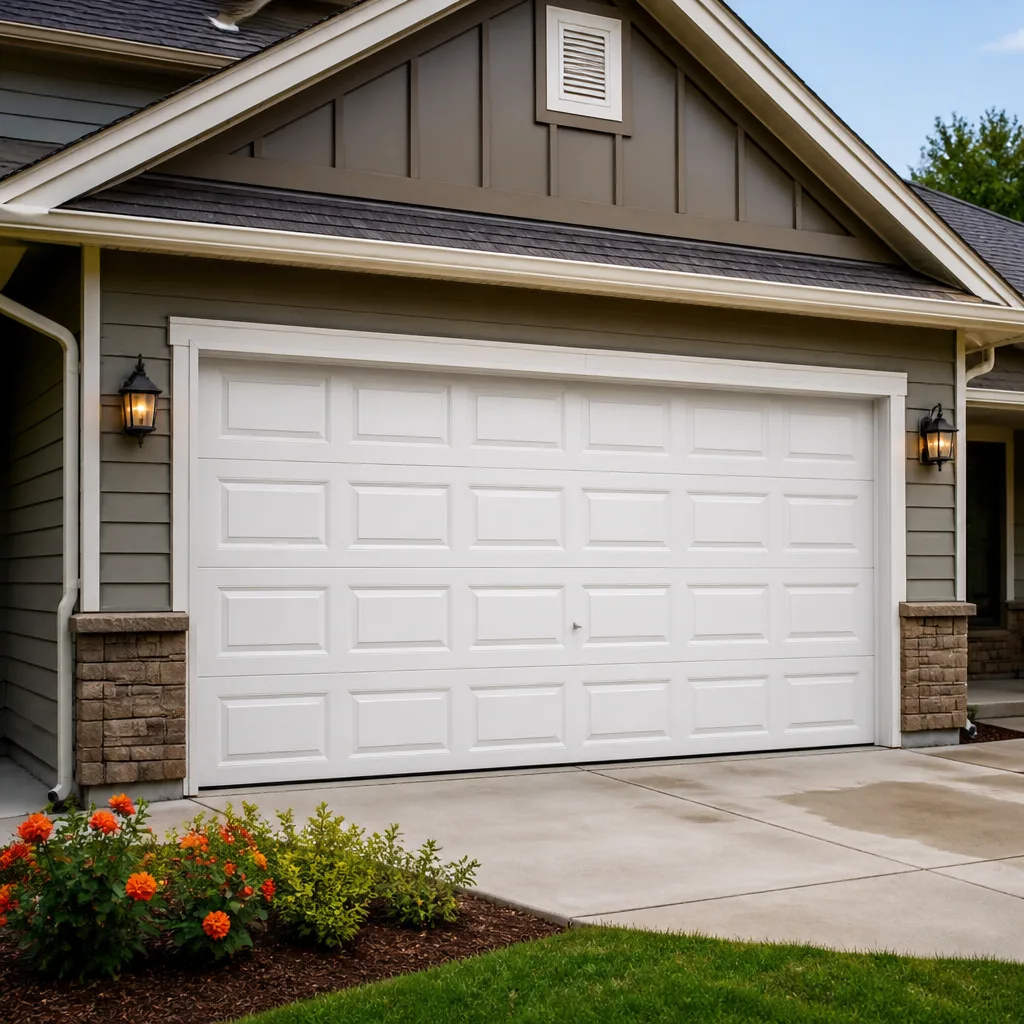 Raised-panel steel
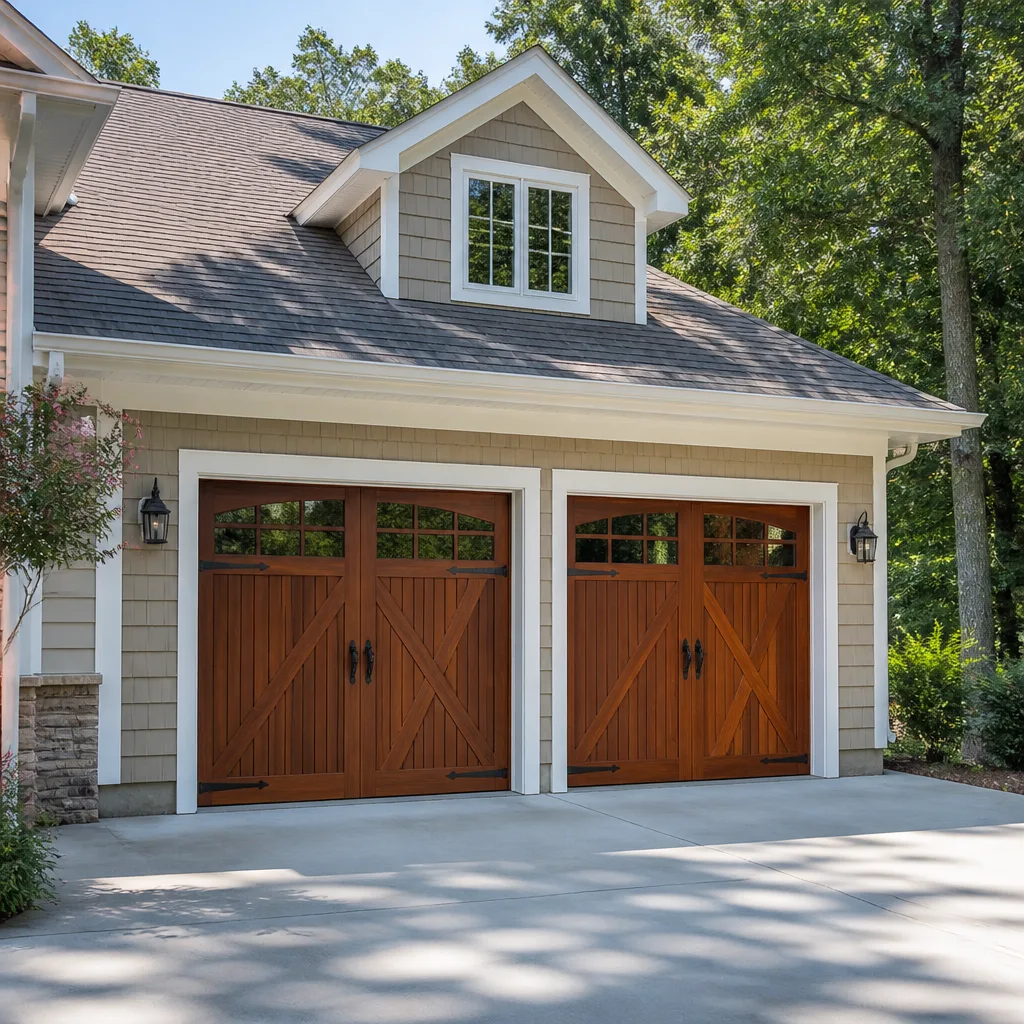 Carriage house
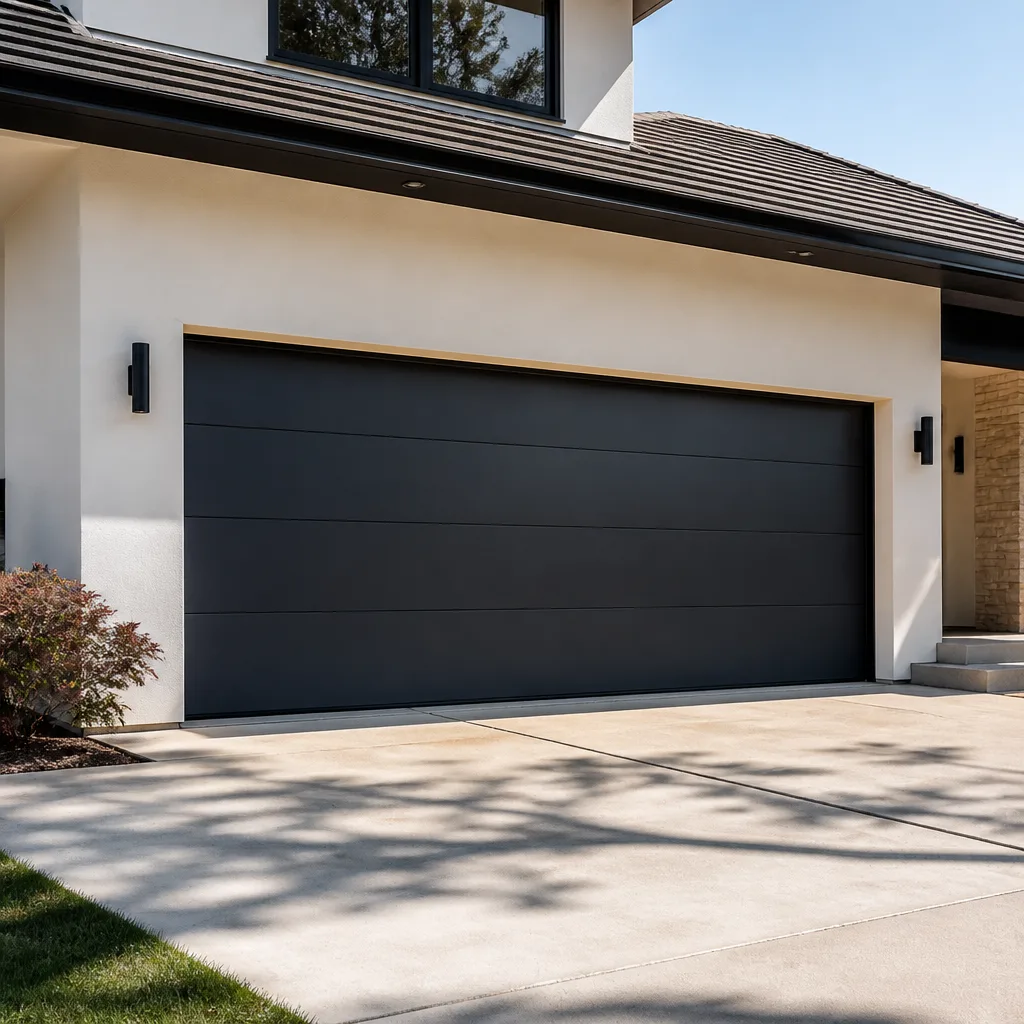 Modern flush
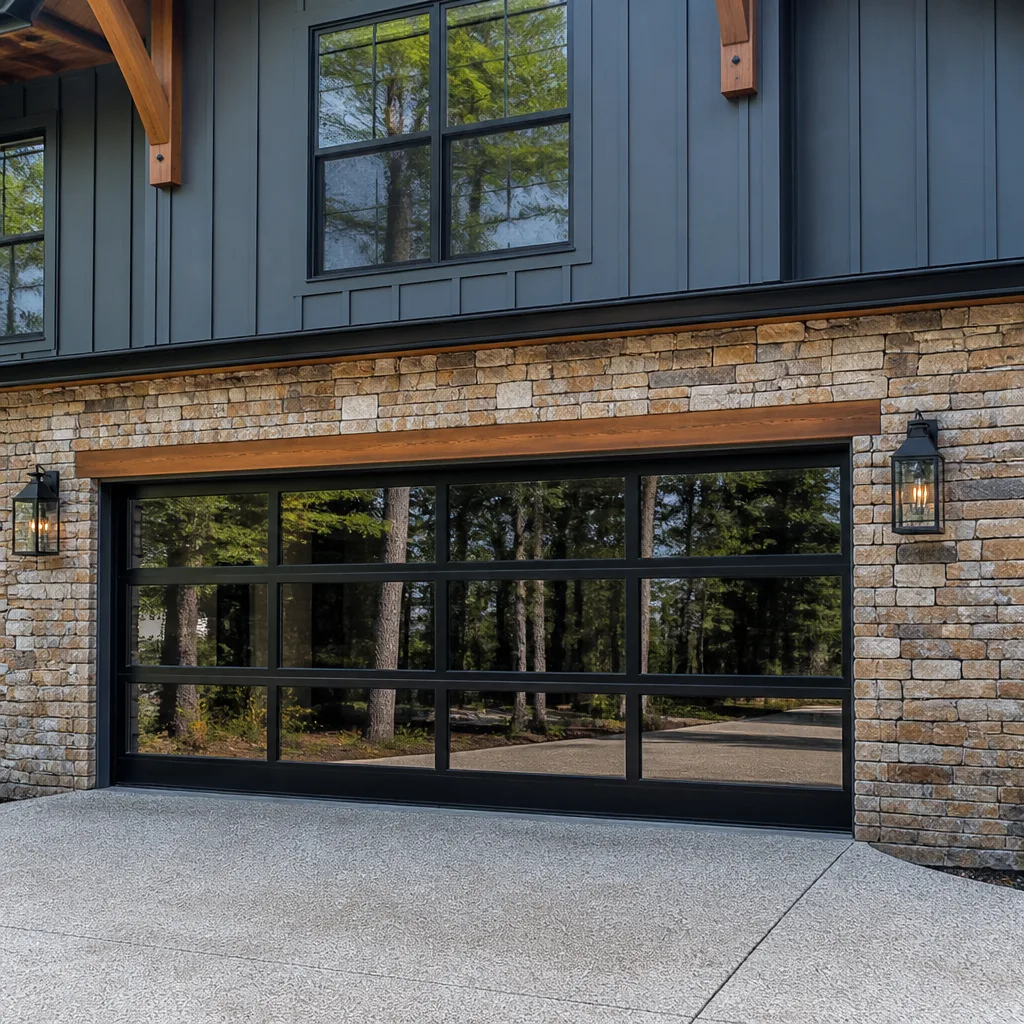 Full-view glass
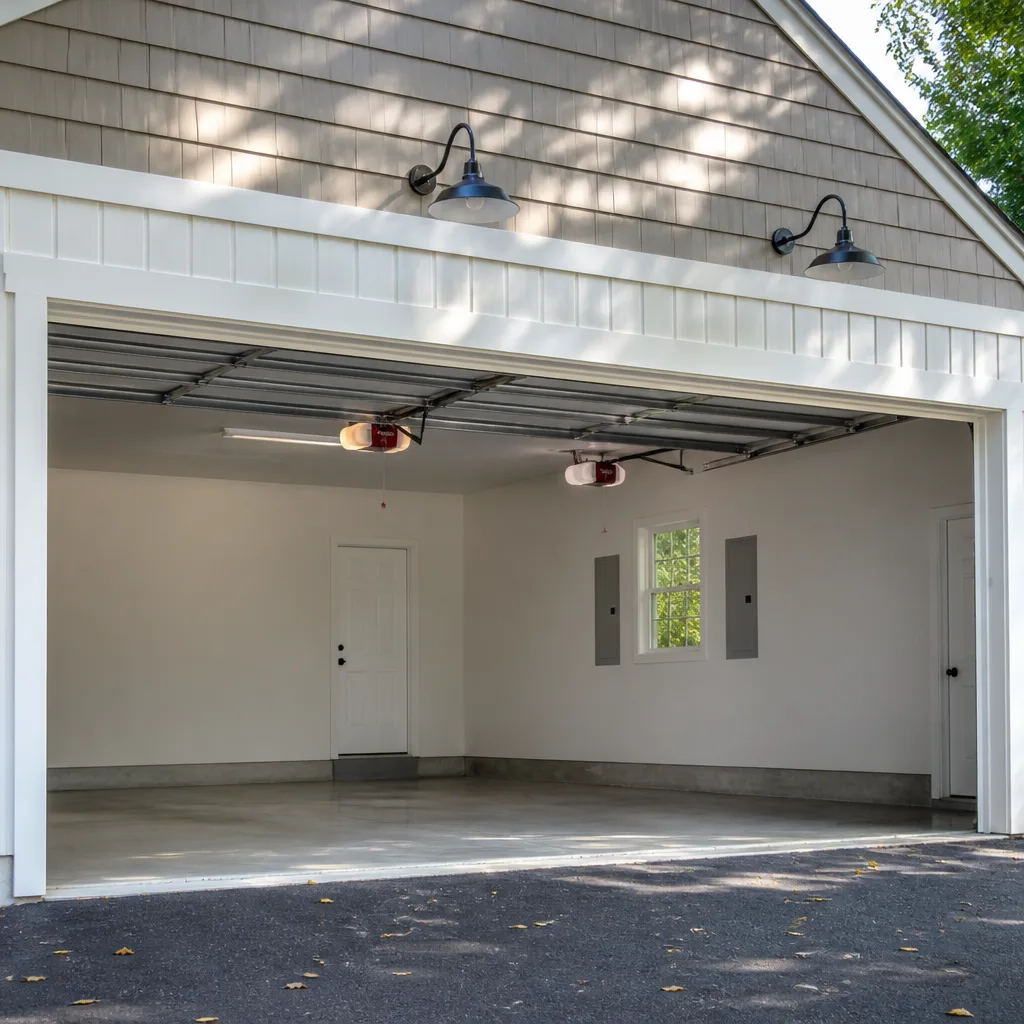 LiftMaster openers
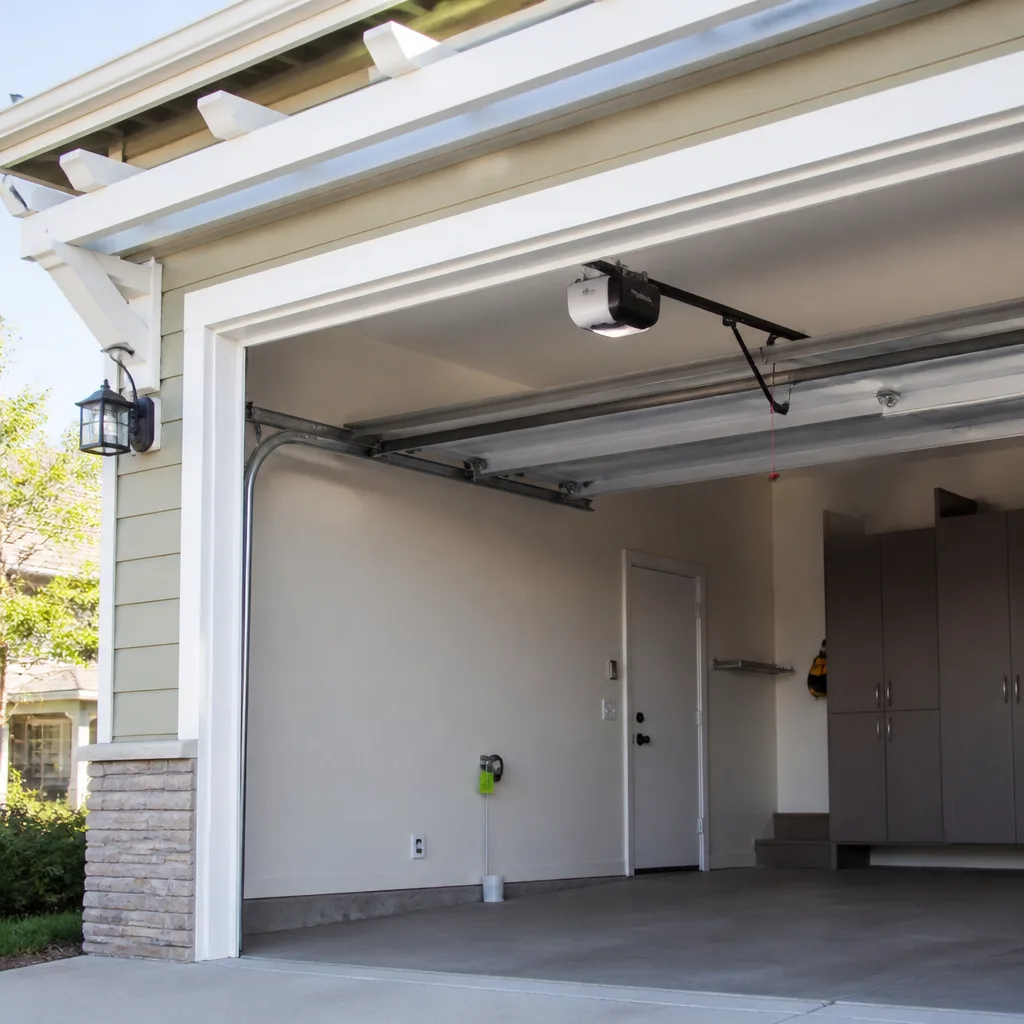 Chamberlain openers
Full 25-point door and opener safety check with every visit - springs, cables, rollers, tracks, and your LiftMaster or Chamberlain opener included
You get a price before we start. It does not change when the pro arrives.
Get your free estimateGarage Door Warning Signs: A Spring Hill Homeowner’s Reference Guide
A garage door that hesitates for two seconds before it moves isn’t a slow opener. It’s a motor working harder than its torque rating allows, and the cause is usually spring tension that’s drifted out of spec, not an opener on its way out. That distinction matters: one repair is inexpensive and quick, the other is a replacement you didn’t need. Most warning-sign lists stop at “your door is noisy, call someone.” This guide goes a level deeper. We’ll explain the mechanical cause behind each symptom so you can tell the difference between a small fix and a serious one before you call anyone. We’ll also show you which sounds, streaks, and movements point at what, with notes specific to Spring Hill homes and the mild, humid climate we work in.
Quick Answer
The most reliable garage door warning signs are a door that hesitates before moving, uneven rise side-to-side, grinding or popping at one specific point in the cycle, a door that reverses before touching the floor, rust streaks on the torsion shaft, and rollers that wobble or show flat spots. Each symptom points to a specific component: springs, cables, limit switches, drums, or rollers. Catching them early usually means a smaller repair. Ignoring them usually means a bigger one.
Styles & brands we work with
- Raised-panel steel
- Carriage house
- Modern flush
- Full-view glass
- LiftMaster openers
- Chamberlain openers
Table of Contents
- What the grinding and popping sounds are telling you
- Why your door rises unevenly (and which side is at fault)
- Why the door reverses before hitting the floor in the heat
- Reading rust streaks on the torsion spring shaft
- How roller wear patterns identify the real problem
- When the opener is the symptom, not the cause
- Why brand familiarity shortens the diagnosis
- When to stop troubleshooting and call a professional
What the Grinding and Popping Sounds Are Telling You
Where in the door cycle a sound happens tells you which component is failing. This is the single most useful diagnostic habit a homeowner can build. A noise at one point in the travel is a localized mechanical problem. A noise that runs the whole cycle is usually a lubrication or alignment issue, and a much cheaper fix.
Listen for the exact moment the sound begins:
- Popping or banging at the very start of opening, near the top of the door: this is nearly always torsion spring related. The spring is at maximum tension at that point, and a spring losing coil strength or developing a hairline crack complains loudest there. Torsion springs sit on a shaft above the door and carry the entire weight of the panels.
- Grinding that starts about a third of the way up and fades near the top: this points at cable fraying or a cable jumping its drum. As the door rises, a frayed cable binds against the drum and drags.
- A rhythmic scrape that repeats every few inches of travel: that’s a roller with a flat spot or a dry bearing, rolling rather than spinning.
- Popping that only happens near the closed position: often a hinge or roller bracket that’s worked loose, or a track section that’s slightly out of alignment where the door seats.
One caution before you start investigating. Torsion springs are under extreme tension even when the door is closed and the opener is unplugged, and they can cause serious injury if handled. Do not reach for the spring, the cables, or the winding cones. Listen, watch, and note the timing. That information alone will save a technician time and save you money, and we can work from it directly on any garage door repair call in Spring Hill.
A quick sound-diagnosis checklist
- Stand back from the door and open it fully, listening for the moment the noise starts.
- Note whether the sound is at the bottom, middle, or top of the travel.
- Check whether the sound happens on opening, on closing, or both.
- Note any rust, kinks, or slack visible on the cables without touching them.
- Write down the timing and share it when you call. It narrows the diagnosis fast.
Why Your Door Rises Unevenly (and Which Side Is at Fault)
Uneven rise is an alignment problem and it’s almost always measurable. When one side lifts faster than the other, the two sides aren’t sharing the door’s weight equally, and the imbalance traces back to one of a small number of components on the lagging side. Watch the gap between the bottom of the door and the floor as it rises. If one corner leaves the floor before the other, you have your answer.
Here’s what uneven rise usually means, working from the most common cause to the least:
- A spring on the lagging side has lost tension. On a two-spring torsion setup, one spring carries half the load. When it weakens, its side sags. This is the most common cause and the one most likely to progress to a full spring failure if ignored.
- A cable on one side is stretched, kinked, or off its drum. A cable that’s jumped the drum changes the effective length on that side, tilting the door. This is a genuine safety issue because a fully off-track cable can let the door drop.
- A cable drum has slipped on the shaft. Less common, but it produces a pronounced tilt that gets worse the higher the door goes.
- A track on one side is bent or out of plumb. The door follows the track, so a bent track steers it sideways.
If your door is a Wayne Dalton torquemaster-style system, the balance mechanism is a torque tube rather than conventional torsion springs, and the adjustment procedure is different. Knowing which system is on your door before anyone touches it is where brand familiarity pays off. We’ve handled enough Wayne Dalton and Amarr doors in Spring Hill to identify the balance system from the door’s movement and the hardware visible at the top.
A door that’s been rising unevenly for a while will also wear its rollers and hinges unevenly, so the repair tends to grow if it waits. Catching it early usually keeps the fix confined to the spring or cable that started it. If the opener has also started straining to lift the uneven door, that’s a separate problem, and our garage door opener repair service handles the motor side once the door itself is balanced again.
Why the Door Reverses Before Hitting the Floor in the Heat
A door that reverses a few inches above the floor on a hot afternoon is usually suffering limit-switch drift, not a sensor problem. This trips up a lot of Spring Hill homeowners because the first instinct is to blame the safety sensors at the bottom of the tracks. Sensors fail, but they fail consistently. If your door closes fine in the morning and refuses in the afternoon heat, the sensors are probably fine and the limit switch is the suspect.
Limit switches tell the opener where “fully closed” is. They’re set at installation and can drift over time as the door’s travel distance changes slightly with temperature. In the Florida heat, the door panels, tracks, and the opener’s rail all expand a little. That expansion can move the effective closed position past the point the limit switch expects, so the opener hits its travel limit and reverses before the door reaches the floor.
Here’s how to tell the two apart on your own door:
- Watch the safety sensors. If either indicator light is off, flickering, or dim, the sensor is the problem. Clean the lenses and check alignment first.
- Test the reversal consistently. If the door reverses in the afternoon but closes in the morning, temperature is involved. That’s a limit-switch drift signature.
- Check for an obstruction near the floor. A small object, debris, or a slightly raised threshold can trigger the safety reverse.
- Listen for the motor. A limit-switch reversal usually sounds like the motor simply stopping and reversing. A sensor trip often makes a distinct click.
Limit-switch adjustment on most openers is straightforward for a trained technician, but the specific procedure varies by brand. Genie and Clopay doors paired with modern openers use different adjustment sequences from legacy units, and getting it wrong can leave the door closing with too much force. That’s a safety concern. If you’re not sure which system is on your door, leave the adjustment to someone who is. A reversing door at the wrong time is a real hazard to anyone underneath it.
Reading Rust Streaks on the Torsion Spring Shaft
A rust streak pattern on the torsion shaft and springs is a countdown clock. Springs are rated in cycles: one cycle is one full open and one full close. A standard spring is typically rated somewhere in the low thousands of cycles. As a spring approaches the end of its rated life, the coils weaken unevenly, and the tiny amount of surface rust that collects on the shaft and spring surface starts to show a pattern. Streaks running along the shaft, or a reddish trail where the coils meet, tell you the spring is working harder and heating up more than it should. When you see that pattern, treat a spring failure as close rather than hypothetical.
This matters because spring failures don’t announce themselves gently. The classic scenario is a door that won’t open one morning because a spring snapped overnight. If the streaks are there and you’ve been ignoring a door that hesitates or sounds louder than it used to, you’re looking at the same underlying issue.
What to look for and what it means:
- Uniform light surface rust on the shaft only: usually cosmetic. Florida humidity leaves its mark on steel, and a little rust isn’t a failure signal by itself.
- Streaks concentrated where the spring coils meet: the spring has been running hot. This is the pattern to take seriously.
- Fresh rust on a spring that’s otherwise clean: suggests recent metal-to-metal rubbing, which means the spring has started to unwind or distort.
- A spring with visible gaps, uneven coil spacing, or a slight bow: this one is already failing. Don’t operate the door.
Because Spring Hill’s humidity is high most of the year, rust on garage hardware is normal here. The skill is telling routine surface oxidation from the specific pattern that signals an approaching spring failure. If you’re unsure, have someone look at it. Spring repair is the one garage door job we insist no homeowner does alone, and it’s a front-line service for us because we know how often it’s the answer.
How Roller Wear Patterns Identify the Real Problem
Roller wear tells you whether the problem is the roller itself or the track it runs in, and the pattern is readable once you know what to look for. Rollers are the small wheels that carry the door along the track. They’re consumable parts and they wear in two distinct ways.
- Flat spots: a roller that’s lost its round shape. Flat spots usually mean the roller has been running dry or overloaded. The symptom is a rhythmic scrape each time the flat spot contacts the track. Flat spots point at the roller, not the track, and replacing the rollers is the fix.
- Lateral wobble: a roller that’s loose in its bracket or its shaft, wobbling side to side as it travels. Wobble usually means a worn bearing, a loose roller stem, or a bent hinge. Wobble alone can be the roller or the bracket.
- Uneven wear on one side of the track only: the track is bent, out of plumb, or not parallel to its partner. Rollers wear where they’re forced. If both rollers on one side are wearing on the same edge, the track is the cause, not the rollers.
Here’s the practical test. Run the door by hand with the opener disconnected, and feel for a spot where the door suddenly gets heavier or binds. That spot is where the track is fighting the rollers. If the door moves smoothly by hand but scrapes when the opener runs it, the problem is more likely the opener’s force setting or the motor itself.
Roller replacement is inexpensive and worth doing before the worn rollers start damaging the track. Track replacement is more involved. Catching a flat spot early is the difference between swapping a wheel and replacing a track section. If you’re in Spring Hill and your door is scraping rhythmically, have the rollers and track looked at together. They tell the same story, and reading both patterns catches the cause rather than just the symptom.
When the Opener Is the Symptom, Not the Cause
Most “my opener is dying” calls turn out to be a door that got heavier, not an opener that wore out. The opener is doing what it’s told. If the door is harder to lift than it was when it was installed, the opener strains, runs hot, and eventually trips its thermal overload or fails. Replacing the opener without fixing the door is how you end up replacing the opener twice.
Signs that the door, not the opener, is the real problem:
- The opener strains audibly but the door moves slowly.
- The opener trips off after a few cycles and works again after it cools.
- The door is noticeably harder to lift by hand than it should be.
- The opener’s force setting has been turned up over time to compensate.
Signs that the opener itself is failing:
- The remote or wall button works intermittently regardless of door weight.
- The opener runs but the door doesn’t move. The motor is spinning but the drive gear or chain has failed.
- The opener’s logic board is unresponsive, or the safety reverse test fails even with a healthy door.
- Smart features via MyQ or Aladdin Connect stop responding while manual operation is fine.
We repair openers across the smart-home systems most Spring Hill homeowners have, including LiftMaster and Chamberlain units on MyQ and Genie openers on Aladdin Connect, as well as older legacy openers that predate the connected era. A Wi-Fi opener that stops responding is often a pairing or board issue, not a dead unit, and it’s worth diagnosing before replacing. Our technicians have up to 8 years of experience across these systems, which means the diagnosis starts with the brand rather than ending there.
Why Brand Familiarity Shortens the Diagnosis
Garage doors are not standardized, and the brand on the door and opener changes what the symptoms mean. A grinding noise on a Clopay door with a torsion system points somewhere different than the same noise on a Wayne Dalton door with a torquemaster-style balance. A limit-switch drift on a Genie opener isn’t adjusted the same way as on a Chamberlain unit. When a technician arrives already familiar with the system, the diagnostic time drops and the estimate gets sharper.
The brands we work on are the ones most Spring Hill homes already have. That means we can match parts to the door rather than improvising. It also means when you describe a symptom on the phone, we can usually narrow the likely cause before we arrive, which helps us give a more useful estimate up front.
Newer Spring Hill homes and recent renovations often come with smart openers and insulated door panels, which changes both the failure modes and the replacement costs. Homes in established neighborhoods frequently have older hardware where a diagnosis hinges on knowing which generation of the brand you’re dealing with. Either way, the right approach is the same: identify the brand and system first, then read the symptoms against what that system tends to do.
For homeowners choosing a brand and installer for a new build or a mid-renovation replacement, we’ve written a companion guide on garage door installation that walks through what to look for. Getting the door and opener matched to the home from the start prevents most of the warning signs in this guide from showing up within a few years of installation.
Common Mistakes to Avoid
- Turning up the opener’s force setting to fix a hard-lifting door. That masks the symptom and stresses the motor and the door hardware. The fix is restoring the door’s balance, not forcing the opener to work harder.
- Replacing the opener when the door is the problem. If the door is heavy or out of balance, a new opener will fail the same way the old one did. Diagnose the door first, every time.
- Blaming the safety sensors for a heat-related reversal. If the door closes in the morning and reverses in the afternoon, the limit switch is the likely cause. Cleaning sensors that aren’t dirty wastes time and leaves the actual issue in place.
- Lubricating the springs or the torsion shaft. Most spring manufacturers ship springs lubricated, and adding the wrong lubricant attracts grit. WD-40 and similar thin oils are not a garage door lubricant. Light grease on the hinges and rollers is where your attention belongs.
- Assuming a quiet door is a healthy door. A door that’s quiet after the springs have been lubricated with the wrong product can still be unbalanced. Test the door’s lift weight by hand instead of judging health by noise alone.
- Ignoring the rust streaks because “it’s Florida.” Some surface rust is normal here. A streak pattern along the spring coils is not. Learn the difference, because the second pattern is a warning, not a cosmetic issue.
- Operating a door that’s off-track to “see what happens.” A door that’s come off its track can drop with serious force. If it’s off-track, don’t run it, and don’t stand under it. Call someone.
See the difference
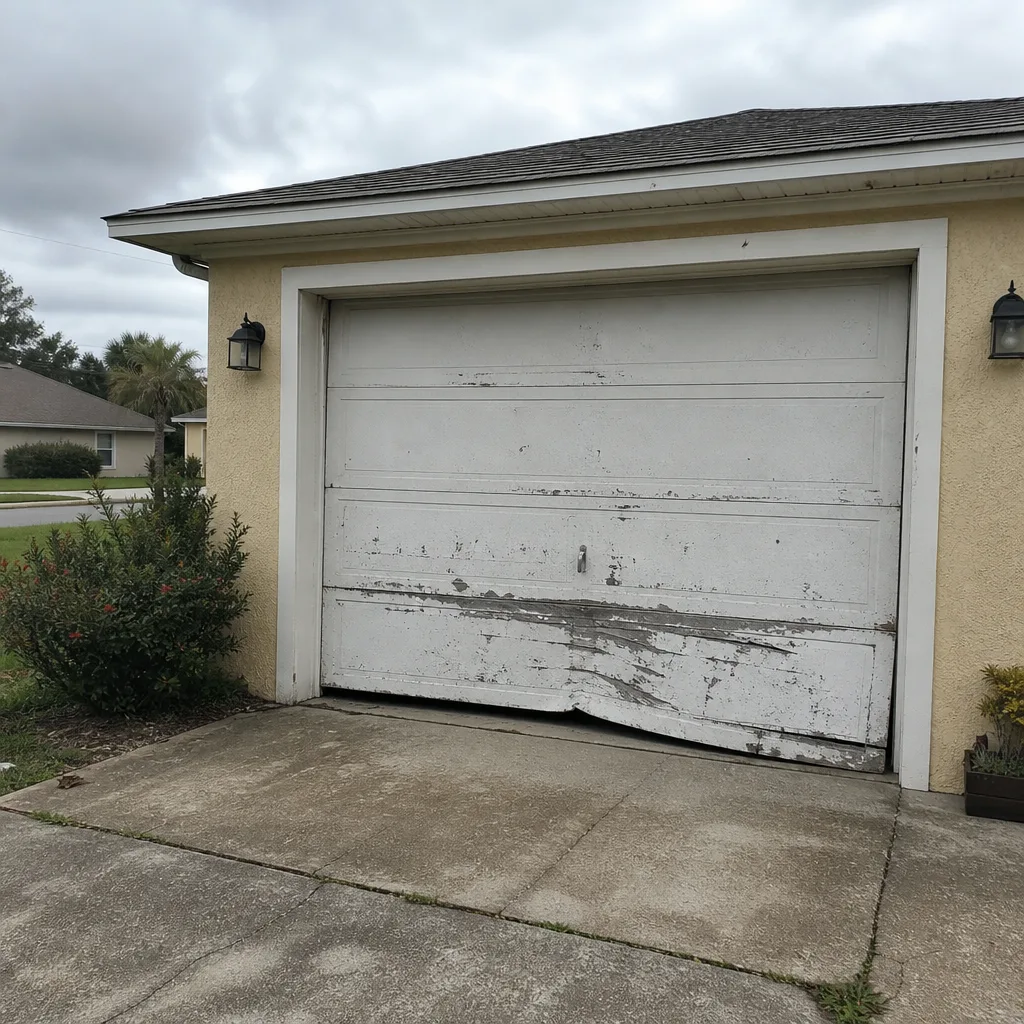 Before
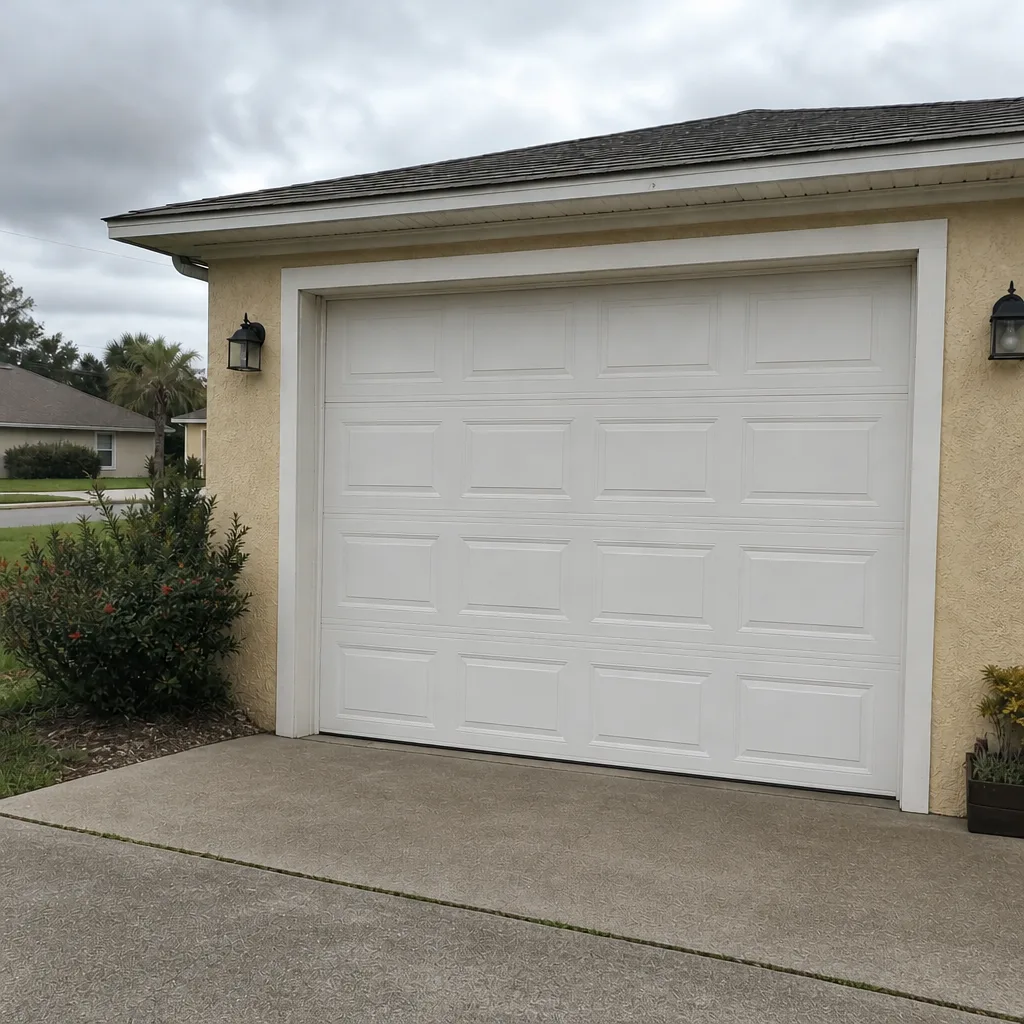 After
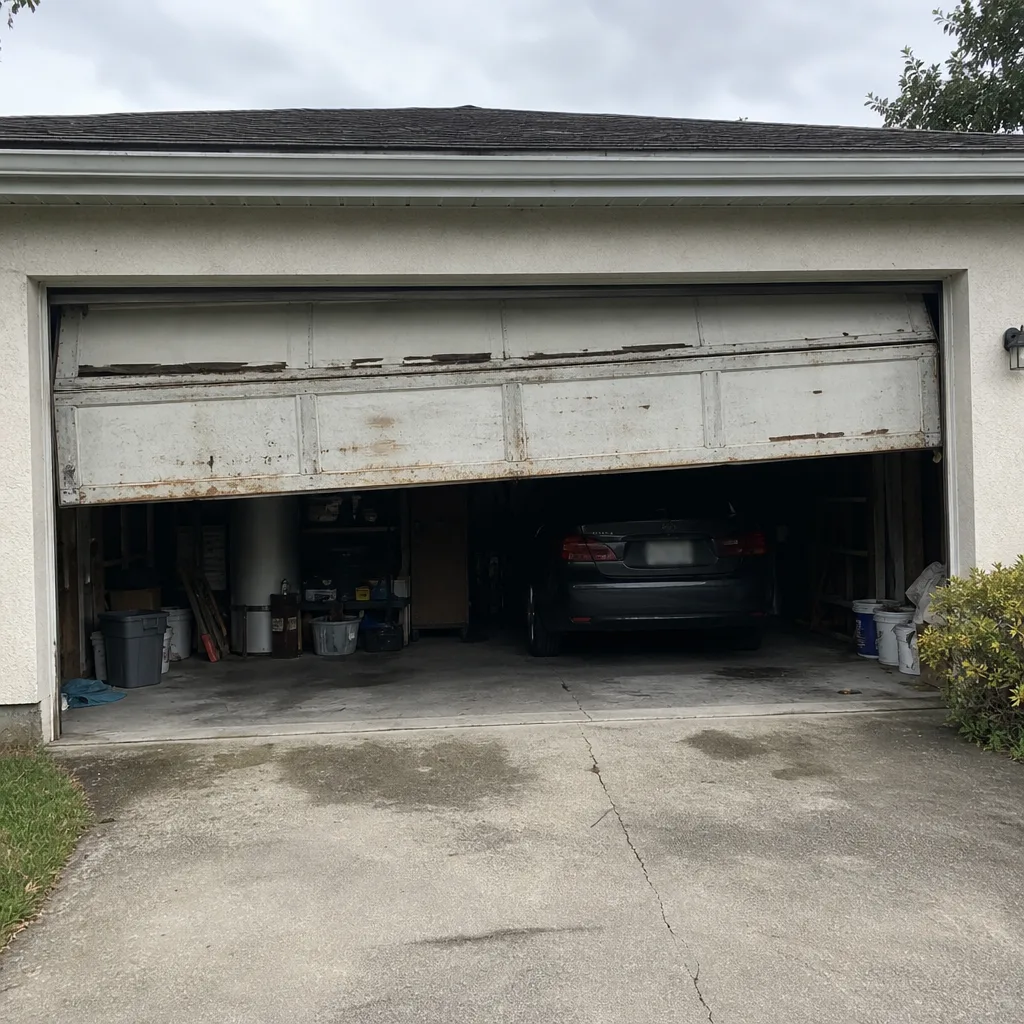 Before
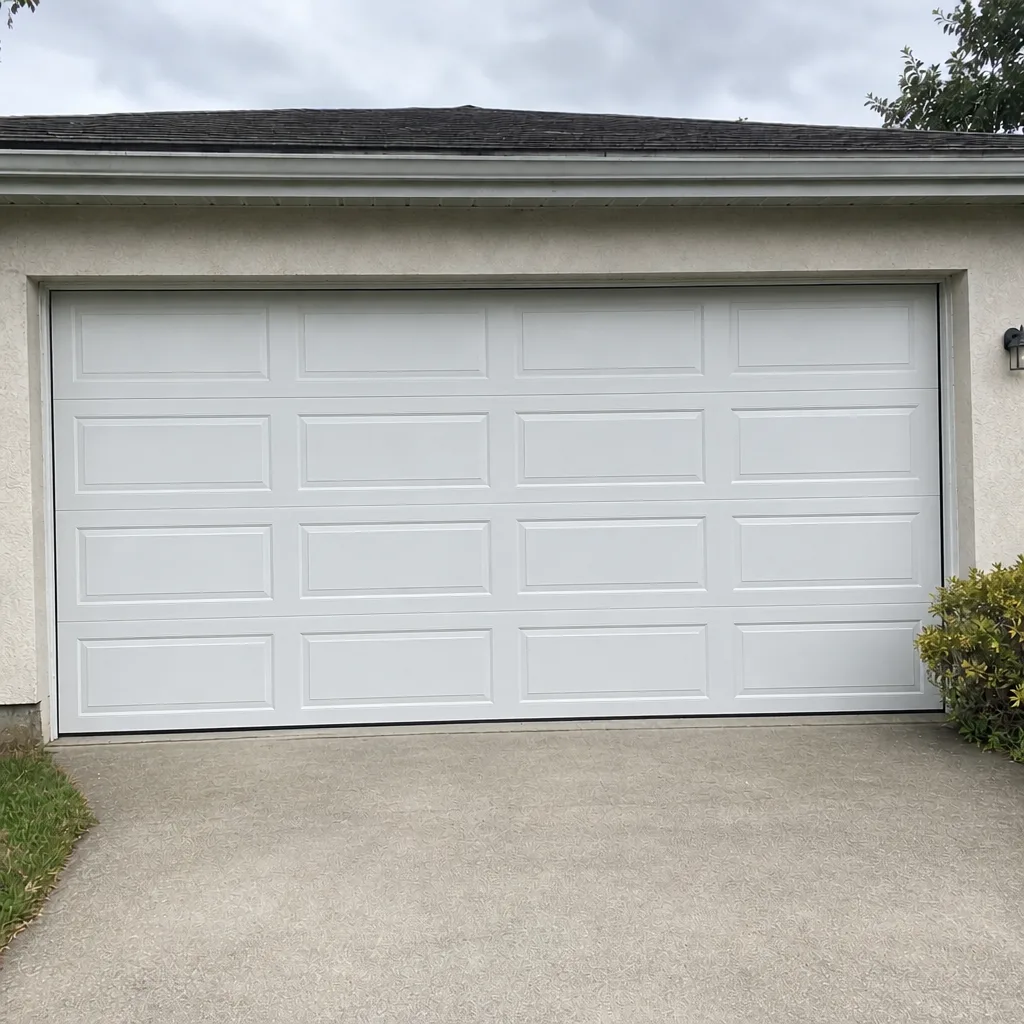 After
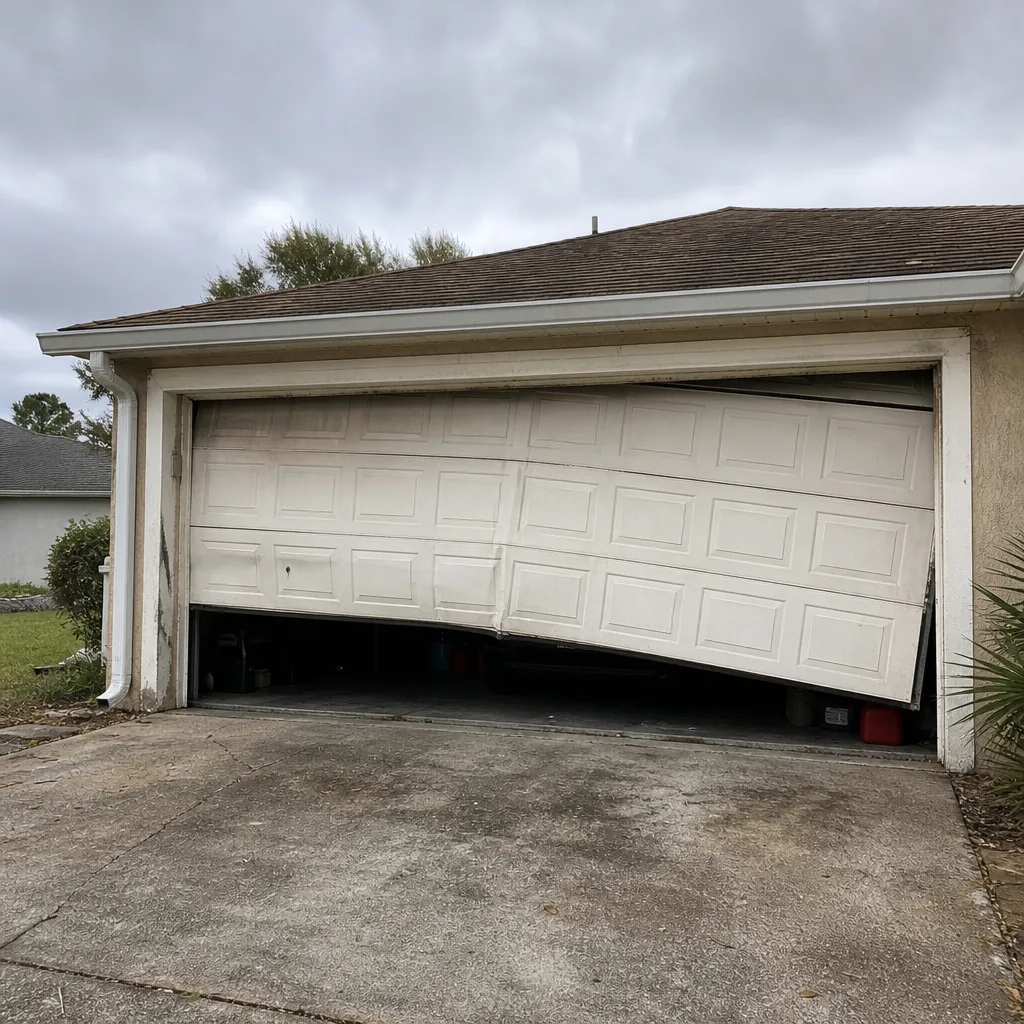 Before
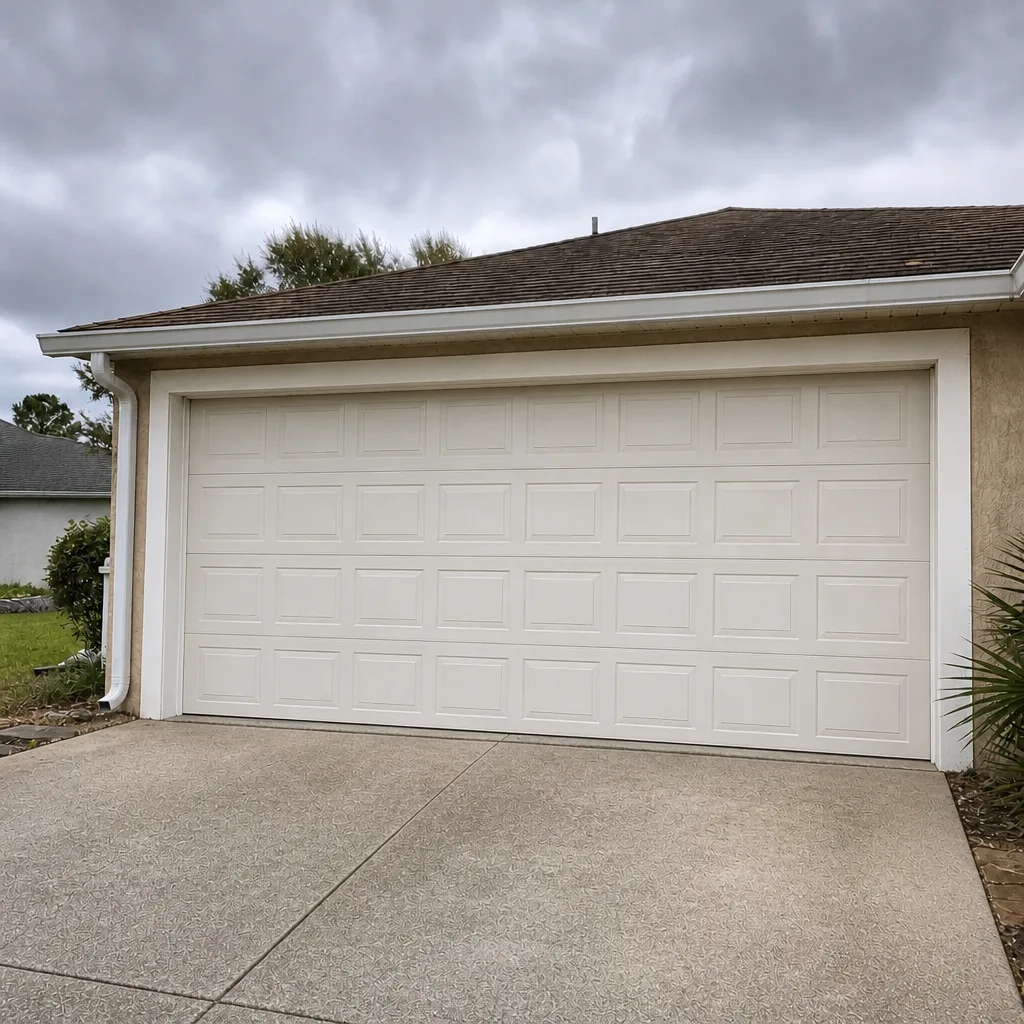 After
When to Call a Professional
Call a professional if the door is off-track, a spring has broken or looks distorted, cables are frayed or slack, or the door reverses unpredictably. Those are safety issues, not maintenance items. Call us sooner rather than later if the door hesitates, rises unevenly, scrapes without letup, or reverses only in the afternoon heat. Those are the symptoms in this guide that grow more expensive when ignored. Spring work in particular should never be a homeowner job: the tension is enormous, and the wrong move can cause serious injury. If the door won’t open or close at all and you’re locked out or your car is trapped, that qualifies as an emergency call, and emergency service is part of what we do, not a premium add-on. Spring Hill Garage Door Repair Pros offers free estimates in Spring Hill. Call (844) 443-4697 and we’ll help you figure out what’s actually wrong.
Frequently Asked Questions
The most common warning sign is a door that hesitates for a second or two before it starts moving. In our experience, that hesitation is usually the opener straining against a door that’s gotten heavier than its springs can carry, not a failing motor. It’s worth having looked at before it turns into a door that won’t open at all. Call (844) 443-4697 for a free estimate.
Look for rust streaks along the torsion shaft and where the coils meet, uneven coil spacing, or a slight bow in the spring. A door that hesitates or sounds louder than it used to is another signal. If the spring snaps, the door won’t lift under opener power and the door becomes heavy and dangerous. Do not attempt to operate or repair a failing spring yourself. Call us and we’ll confirm what’s going on.
A hesitation almost always means the opener is working harder than its torque rating allows because the door is out of balance. The cause is usually spring tension that’s drifted or a mechanical bind in the track and rollers. The opener is the messenger, not the culprit. Our Spring Hill Garage Door Repair Pros team can diagnose the balance issue and give you a written price before any work starts.
No. The written estimate you agree to before work begins is the price. Garage door work sometimes reveals a secondary issue once the door is apart, and if that happens the technician stops and gives you a revised quote before doing anything else. You’ll never get an invoice that doesn’t match the quote you approved. Call (844) 443-4697 for a free estimate.
Yes. Emergency garage door service is part of our core offering, so a broken spring, a door off its track, or an opener that won’t respond gets priority. Same-day service is our goal for repair calls. Call (844) 443-4697 and tell us what the door is doing, and we’ll book you in for the earliest available slot.
The local professional who performs the work is licensed and insured as their state requires. We connect you with vetted local technicians, and we only work with professionals who carry the proper credentials for garage door work in Florida. If you’d like to confirm coverage before the appointment, call us at (844) 443-4697 and we’ll help.
That pattern is usually limit-switch drift caused by the afternoon heat expanding the door panels and tracks. The limit switch is calibrated to a closed position that’s changed slightly with temperature. It’s an adjustment, not a sensor replacement. It’s also a safety issue, since a door that reverses unpredictably can catch someone or something. Call (844) 443-4697 to get it adjusted.
No. A door that’s off-track can drop without warning, and running the opener puts the whole door’s weight on hardware that’s already failed. Keep people and pets out from under it and call for emergency service. A door that’s come off its track is one of the situations where attempting to cycle it again can make the damage worse and create a real safety hazard.
The Bottom Line
Most garage door warning signs are telling you about a small problem getting bigger, not a door that’s about to fail entirely. A hesitation, an uneven rise, a scrape at one point in the cycle, a reversal only in the heat, a rust streak, or a wobbling roller are all diagnosable from the symptom alone once you know which component to look at. Reading the cause instead of just the symptom is what separates a small repair from a large one. If you notice any of these in Spring Hill, get a free estimate before you need an emergency call. Call (844) 443-4697 and we’ll tell you honestly what it needs.
Written by the team at Spring Hill Garage Door Repair Pros.