Last updated November 22, 2026
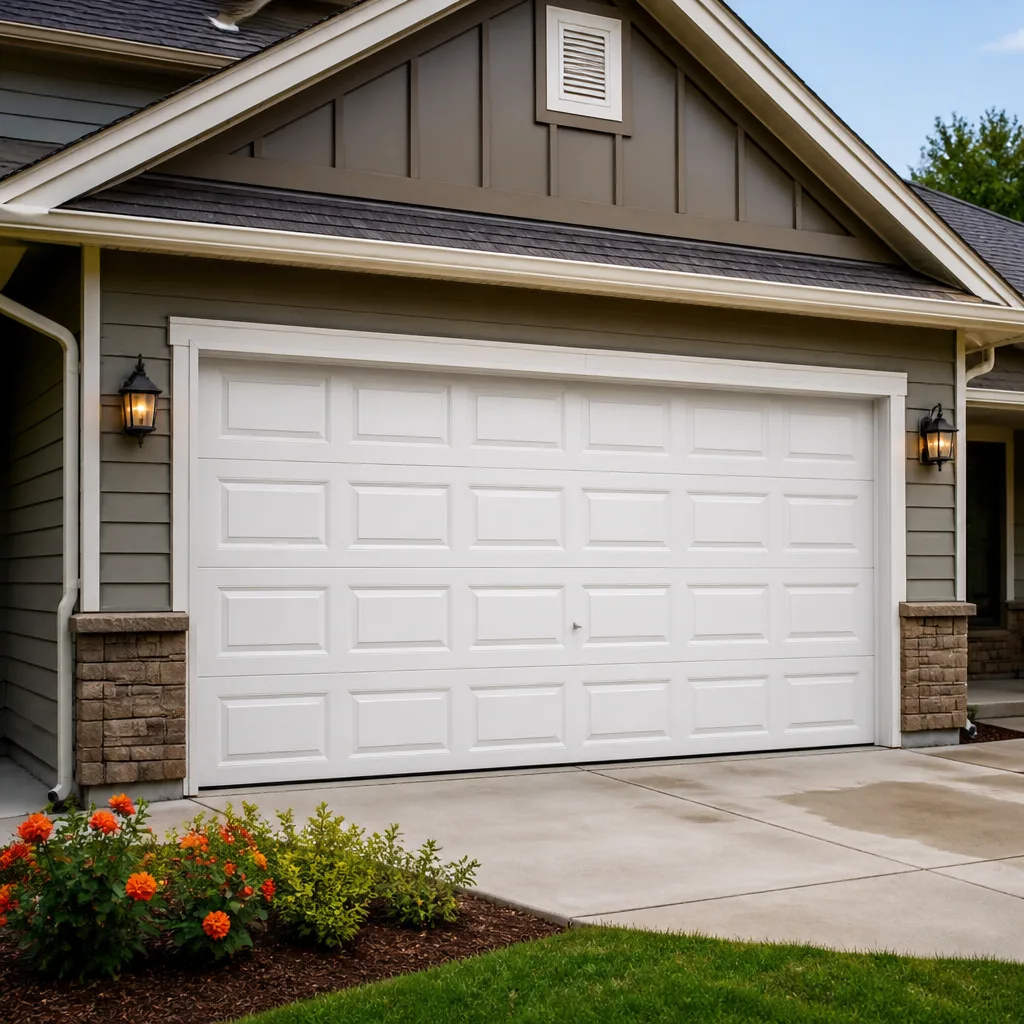 Raised-panel steel
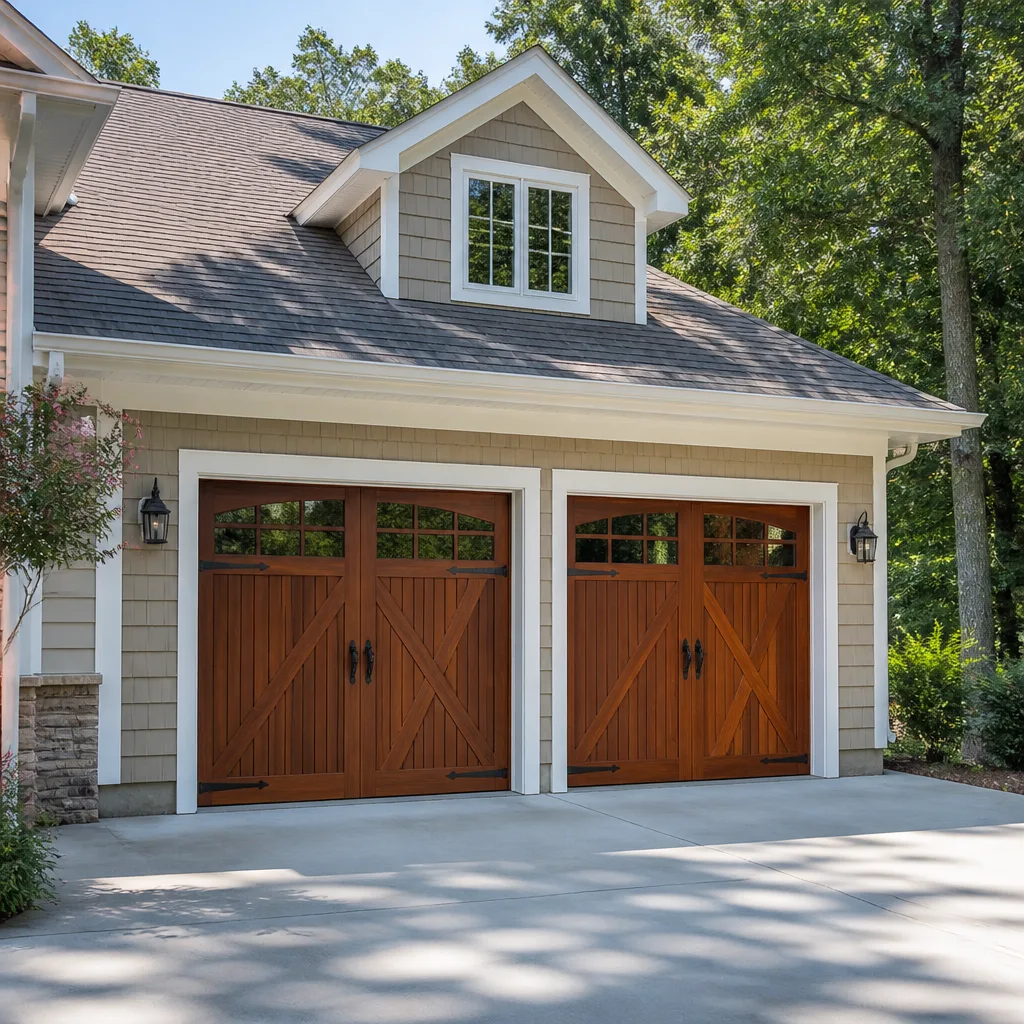 Carriage house
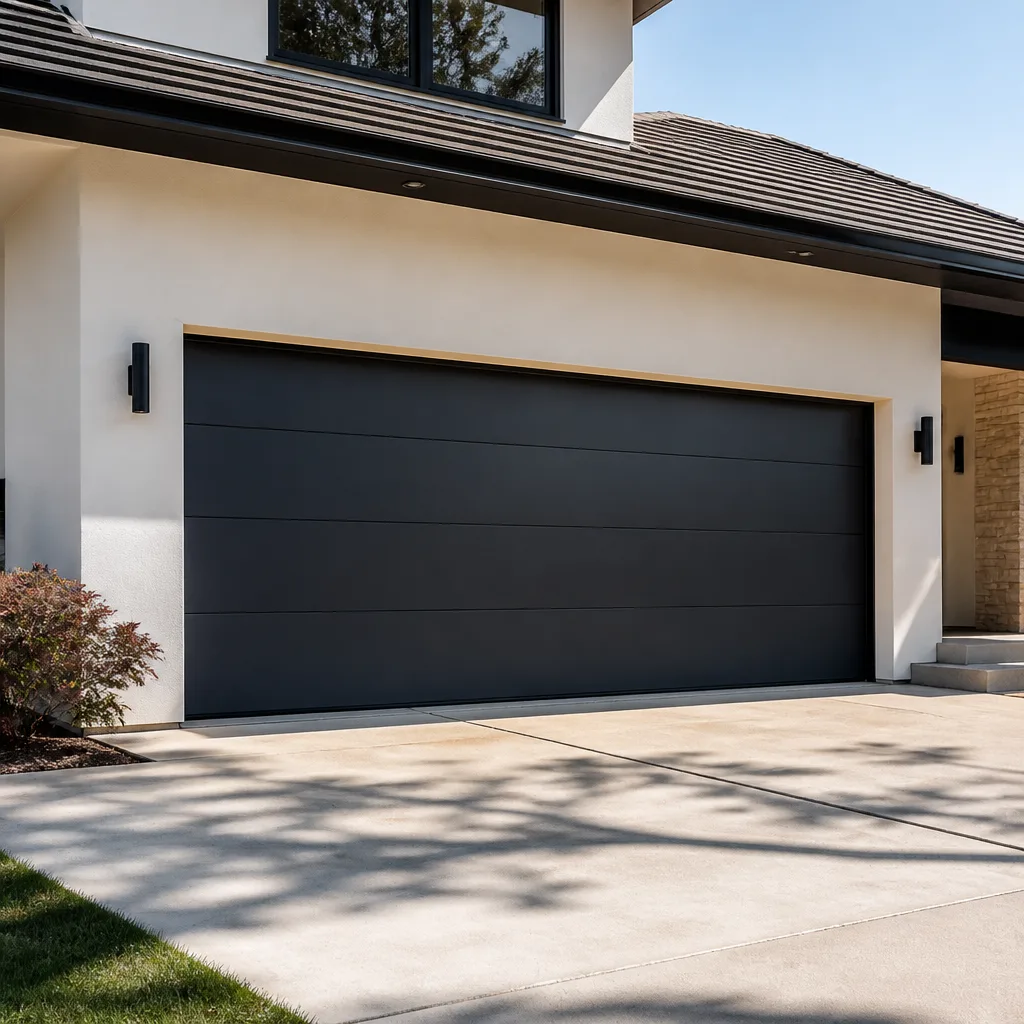 Modern flush
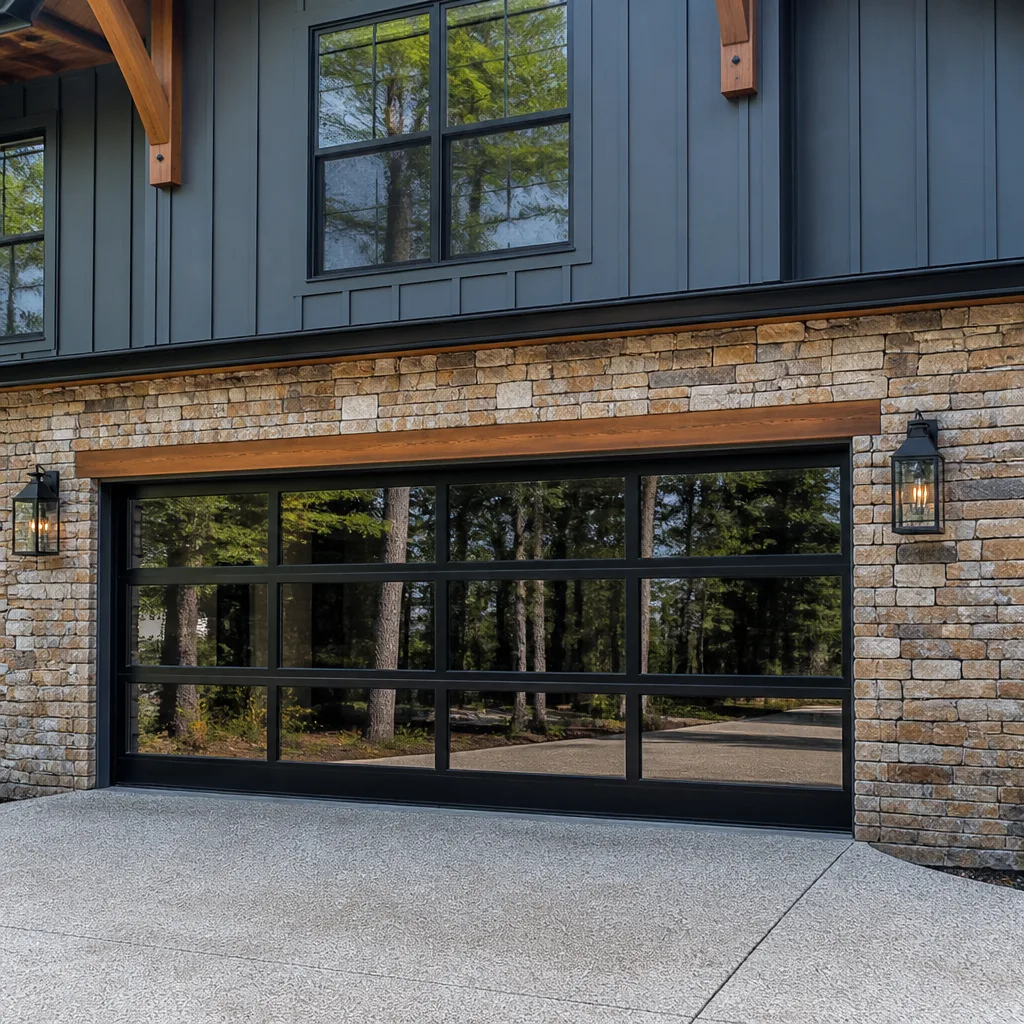 Full-view glass
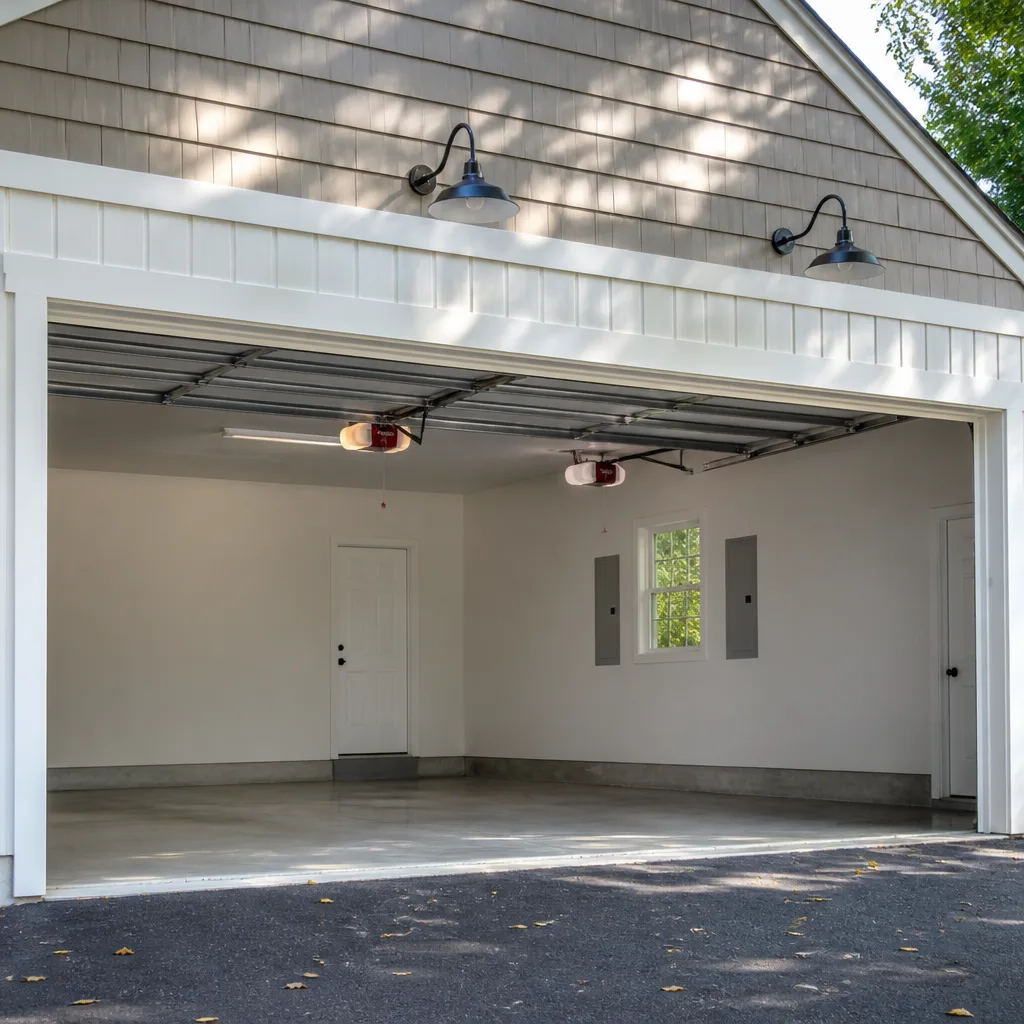 LiftMaster openers
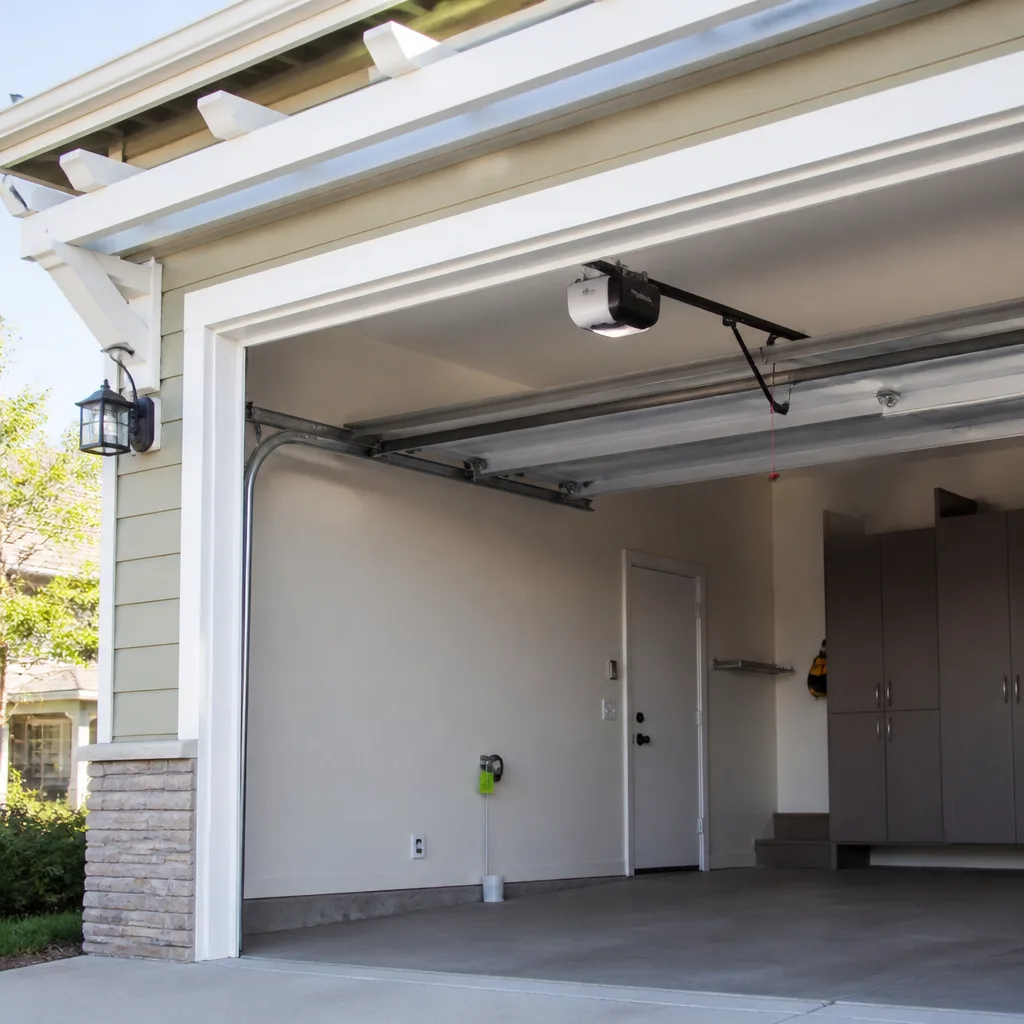 Chamberlain openers
Full 25-point door and opener safety check with every visit - springs, cables, rollers, tracks, and your LiftMaster or Chamberlain opener included
You get a price before we start. It does not change when the pro arrives.
Get your free estimateDIY vs Professional Garage Door: The Spring Hill Homeowner’s Decision Guide
Most homeowners who ask whether they can fix their own garage door are asking the wrong question. The real question isn’t whether you’re handy enough. It’s whether the specific task in front of you carries injury risk that stays the same no matter how many videos you watch or how many weekends you’ve spent in the workshop. A torsion spring stores roughly 100 foot-pounds of torque when it’s wound, and that energy doesn’t care how careful you are. This guide breaks the decision down task by task, explains what Florida code means for a DIY door replacement in Spring Hill, and shows you where the real cost savings live and where they don’t.
Quick Answer
You can safely handle some garage door work yourself: roller replacement, sensor alignment, and limit-switch adjustment on your opener. Springs, cables, and cable drums are not DIY territory under any circumstances, because the stored energy in those parts causes serious injury when a step goes wrong. For anything involving a full door replacement in Florida, permits and wind-rated product approval turn a weekend project into a liability question, so professional work is the practical answer.
Styles & brands we work with
- Raised-panel steel
- Carriage house
- Modern flush
- Full-view glass
- LiftMaster openers
- Chamberlain openers
Table of Contents
- The Task-by-Task Risk Matrix
- Why Springs Are a Physics Problem, Not a Skill Problem
- Florida Code and DIY Door Replacement: What You Need to Know
- The Real Cost Comparison: Parts-Only vs Professional
- Wind-Rated Doors and DIY Track Work
- How to Tell If a Previous DIY Repair Made Things Worse
- Why Brand Familiarity Changes the Repair
- When to Stop and Call
The Task-by-Task Risk Matrix
Not every repair is a coin flip between “do it yourself” and “hire out.” Garage door work falls into three honest categories: tasks a careful homeowner can complete, tasks that need a professional because of building or insurance implications, and tasks that are genuinely dangerous regardless of your experience level. Sorting your problem into the right bucket is the whole decision.
Safe for a Confident Homeowner
- Roller replacement. Worn nylon rollers make a door rattle and jump. Swapping them means loosening the hinge bracket with the door in the down position and the spring relaxed. Keep the door closed and don’t touch the spring.
- Safety sensor alignment. The two small sensors near the floor need to see each other. A bumped one, a dirty lens, or a sun angle flooding the receiving eye is the most common reason a door reverses for no clear reason.
- Limit-switch adjustment. If the door stops a few inches short of the floor or hits and reverses near the top, the travel limits on the opener are usually out of range. The manual for your LiftMaster or Genie unit walks through the button sequence.
- Weather seal and bottom rubber replacement. The seal along the bottom of the door is a wear item. Slide the old one out of its channel, slide the new one in.
- Remote and keypad programming. Pairing a new remote or resetting a keypad code is a manual-and-buttons job.
Professional Territory, No Exceptions
- Torsion spring winding or replacement. The spring above the door holds the full weight of the door under tension. One slip with the wrong bar is enough to break a hand or worse.
- Extension spring replacement. Less talked about, just as unforgiving. The springs run along the horizontal tracks and carry the same stored energy.
- Cable replacement and cable drum work. The cables are under the spring’s tension. A cable that snaps free can whip across the garage.
- Track realignment on a wind-rated door. Straightening a bent track looks simple until you factor in the product approval on the door (more on this below).
- Panel replacement that touches the door’s structural frame. Any repair that changes how the door meets its reinforcement is a structural question.
If you’re in Spring Hill and you’re not sure which category your problem falls into, that uncertainty itself is a good reason to get a free estimate. It costs you nothing to have someone look and tell you plainly whether you can handle it. Our technicians have up to 8 years of experience across LiftMaster and Chamberlain systems, and they’ll tell you when a job is a homeowner job.
Why Springs Are a Physics Problem, Not a Skill Problem
A wound torsion spring stores energy in direct proportion to how much it’s been wound. The torque needed to hold up a typical two-car garage door in Spring Hill is substantial, and that stored force is what balances the door so you can lift it with one hand. When the spring fails or is released incorrectly, that energy leaves fast. This is the part YouTube tutorials skip over: the danger is not in your hands, it’s in the tension.
Consider what a spring repair actually involves:
- Secure the door in the fully open position with locking pliers on the track so it can’t drop.
- Release the tension using the correct winding bars, in the correct direction, one quarter turn at a time.
- Remove the old spring and measure its wire gauge, inside diameter, and length to match the replacement.
- Install the new spring, then wind it to the exact number of turns the door’s weight requires.
- Test the balance with the opener disconnected and the door halfway open.
- Reconnect the opener and re-test the safety reverse.
Every step is dangerous if something goes wrong. The winding bars need to fit the cone exactly. The door needs to be secured before the spring comes off. The spring needs to match. A homeowner who gets four of the six steps right still has a loaded spring hanging over their car. This is why we list spring repair as a front-line service rather than a footnote. When a torsion or extension spring lets go in a Spring Hill home, the door is usually stuck, sometimes half-open, and that’s an emergency in the sense that matters: the garage is your primary entry and the house is now exposed. That’s a call to us, not a shopping trip to the hardware store. Spring Hill Garage Door Repair Pros handles spring repair as one of our core services.
Florida Code and DIY Door Replacement: What You Need to Know
Here’s where the DIY conversation changes once you’re in Florida. If your question is about repairing a component (a spring, a roller, an opener), local permitting is minimal or nonexistent. If your question is about replacing the entire garage door, you’ve stepped into Florida Building Code territory, and the rules are stricter than most homeowners expect.
The short version:
- A permit is typically required for a full garage door replacement in Florida, because the door is part of the building envelope and the door opening factors into the home’s wind-load performance.
- Wind-rated doors must meet the Florida Product Approval for the design pressure at your location. The door you install has to match what the code requires for the opening.
- A homeowner can often pull the permit themselves for work on their own primary residence, but the inspection still has to pass, and the installation still has to follow the manufacturer’s approved method.
- Resale disclosure matters. Unpermitted work can surface during a home inspection or title search. Buyers and their agents in Spring Hill ask about it, and the resolution is usually either retroactive permitting (expensive) or removal of the door and reinstallation by a licensed contractor.
Whether a homeowner-pulled permit is allowed for your specific door and your specific property is a question for the city’s building department, and we always recommend you check before you order anything. What we can tell you is that a door installed without the correct product approval or without passing inspection is a real problem when you sell. This is why we handle garage door installation with permits, product approval documentation, and installation to the manufacturer’s approved method from the start. It’s not about the paperwork. It’s about what happens in a wind event and what happens at closing.
The Real Cost Comparison: Parts-Only vs Professional
Homeowners often assume the savings from DIY are the price of the part. In practice the math looks different, because a specialty part in Spring Hill may not be available locally. A torsion spring has to match the wire gauge, inside diameter, and length exactly, or the door won’t balance. If the local hardware store doesn’t stock the size your door needs, you’re waiting on shipping, and your car is stuck in the garage while you wait.
Typical estimated ranges for the five most common repairs, showing the parts-only side and the professional all-in side. These are estimates only; the written quote you get before any work starts is the final price.
| Repair | DIY parts-only (est.) | Professional all-in (est.) | What drives the difference |
|---|---|---|---|
| Torsion spring (one spring) | $60-$120 | $180-$340 | Exact-match part, correct wind count, safe release and install |
| Torsion spring pair | $120-$240 | $360-$680 | Matched pair replacement, balance test |
| Rollers (full set) | $30-$60 | $90-$180 | Proper hinge alignment, worn hinge check |
| Opener repair / board swap | $80-$200 | $180-$350 | Diagnosis, correct board, re-pairing remotes, force and travel setup |
| Safety sensor replacement | $25-$45 | $100-$175 | Wiring, alignment, reverse test |
Two things show up in that table that homeowners miss. First, the DIY column doesn’t include the cost of a wrong part, a second purchase, or the damage from a failed attempt. Second, when a matched pair is replaced rather than a single spring, the pro range roughly doubles because the parts double. That’s not an upsell; it’s how those doors are built. Springs on a two-car door are matched to each other, and putting one new spring next to one old spring means the pair stops being balanced and the door loads unevenly.
Where the DIY math does win is on the easy jobs. Rollers and sensor replacement are genuinely cheap and genuinely safe. If the fix is $30 of parts and you’re comfortable with a screwdriver, do it. The savings disappear the moment the job requires a loaded spring or a permit.
Wind-Rated Doors and DIY Track Work
Most homes in Spring Hill have a door that was installed with a Florida Product Approval number tied to its wind rating. That approval covers the door, the track, the reinforcement, and the installation method together. When a homeowner bends a track back into place or swaps a track without matching the original spec, the door’s compliance with its approval is no longer guaranteed. In the event of a claim, that matters. Insurance carriers can question coverage when the door no longer matches its rated configuration.
We’ve seen this play out more than once. The track gets bent from a slightly-too-fast opener or a backed-into door, someone straightens it with a rubber mallet, and the door works fine for a while. Then it starts rubbing, or the panels don’t align, or the door walks out of the vertical tracks on one side. Getting a wind-rated door back into spec means matching the reinforcement to the original approval, not just making the track look straight.
If you’re not sure whether your door is wind-rated, look for a sticker or label on the door’s bottom panel or inner frame. Raynor, Clopay, and Amarr all label their rated doors, and a call to us can usually confirm the model from a description and a photo. For anything structural on a rated door, we recommend professional garage door repair so the work is done to the approval’s requirement and documented for your insurer and your eventual buyer.
How to Tell If a Previous DIY Repair Made Things Worse
When we get called to a Spring Hill home for a problem the homeowner thinks is brand new, we often find a repair that was already in the door from an earlier owner or an earlier attempt. Here’s what we look for, and what you can check yourself before you call:
- Mismatched springs. One spring a different color from the other, or a spring with a different coil count. The door is out of balance and the opener is working harder than it should.
- Over-wound or under-wound springs. The door may feel too heavy to lift by hand, or float up on its own. Both signal an incorrect turn count from the last install.
- Rollers removed from one hinge and left out. Hinges on a wind-rated door include additional fasteners, and missing hardware compromises the door’s load path.
- Adjustment bolts cross-threaded on the opener rail. Often from using the wrong tool on the travel limits. The opener runs but the door doesn’t stop where it should.
- Sensor wired backwards. The opener behaves erratically, sometimes running for a few feet then reversing for no reason. It’s a symptom of a swapped polarity, not a bad board.
- Track bent and straightened rather than replaced. Cosmetic fix on a functional component. The door works today and binds within weeks.
- Wiring splices taped and left exposed. Low voltage on the sensor side, but dangerous on the opener power side.
If you see any of these, the repair is usually simpler than you think once the right diagnosis is made. The problem isn’t the individual component; it’s understanding how the system was supposed to work in the first place.
Why Brand Familiarity Changes the Repair
Garage door hardware is not universal. A Genie opener’s limit switches adjust differently from a LiftMaster’s, and the travel module on a Chamberlain unit doesn’t behave like a Raynor system. When the technician shows up and already knows the platform, your repair takes minutes instead of an hour of guessing. When they don’t, you get a diagnosis that starts with “let’s try this and see.”
Our technicians work on the eight major brands homeowners in Spring Hill actually have: LiftMaster, Chamberlain, Genie, Clopay, Amarr, Wayne Dalton, Craftsman, and Raynor. That matters most on the opener side, because two platforms dominate the smart-home market and each has its own quirks. The LiftMaster and Chamberlain MyQ ecosystem behaves very differently from Genie’s Aladdin Connect when it comes to reconnecting a door after repair, and both platforms need specific settings to stay connected. If you have a smart opener and it drops off Wi-Fi after a repair, the fix is in the setup, not in the router. That’s where garage door opener repair becomes a diagnostic service rather than a part swap.
On the door side, Clopay and Amarr have distinct panel profiles and reinforcement patterns. Putting a Raynor panel on a Clopay door, or vice versa, either doesn’t fit or leaves a gap that wind can enter. Matching parts to the door’s brand is not a nicety. It’s the difference between a repair that lasts and a repair that starts a new problem.
When to Stop and Call
Some symptoms are benign. Some are warnings. Here’s the line to hold:
- A loud bang from the garage, then the door won’t lift. The spring failed. Do not try to open the door by hand or by the opener. Call for spring repair.
- The door hangs at an angle, one side lower than the other. A cable has likely come off or snapped. Don’t run the opener. The door can drop.
- The opener runs but the door doesn’t move. Usually a broken spring or a disconnected trolley. Either way, the door isn’t being held by anything, and that’s a danger to anyone under it.
- Grinding or scraping sound as the door goes up or down. Worn rollers or a bent track. If the track is involved, stop using the door until someone looks at it.
- The door reverses for no reason or won’t close without holding the wall button. The safety sensors are likely misaligned or one has failed. If you’re seeing this with a sick family member or a car parked below, treat it as urgent.
- Visible sparks, buzzing, or a burning smell near the opener. Stop immediately and turn off the breaker to the opener. That’s an electrical fault, and it’s not a homeowner repair.
If you’re not sure whether your symptom is urgent, the safe move is to close the door by hand if it’s light enough and call. Opening a stuck door by hand when a spring is involved is the leading cause of homeowner injury on garage doors. Don’t be the person who does that.
Common Mistakes to Avoid
- Winding a torsion spring without proper winding bars. Screwdrivers and pry bars slip out under load. The spring unwinds and the tool becomes a projectile. Use the correct bars or don’t touch the spring.
- Replacing one spring when the pair is worn. Springs on a two-car door are matched. One new spring beside one tired spring makes the door load unevenly and shortens the life of both.
- Straightening a bent track instead of replacing it. In Spring Hill, where wind-rated doors are common, a bent-and-straightened track can pull the door out of its approved configuration. That’s a resale problem and an insurance problem.
- Installing a new door without pulling the permit. Florida Building Code treats a full replacement as permitted work. Skipping the permit is cheap until the buyer’s inspector finds it.
- Adjusting the opener’s force settings to compensate for a heavier door. The force setting is not the problem. If the door feels heavy, the spring is the problem. Turning up the force strains the opener and can cause the door itself to come down on something.
- Buying a torsion spring from an online listing that doesn’t match the original. Wire gauge, inside diameter, and length have to match. A spring that’s close enough will fail early or won’t balance the door.
- Reconnecting a smart opener without checking the app. LiftMaster MyQ and Genie Aladdin Connect can lose their pairing after a repair. A door that works from the wall button but not from the app usually just needs to be re-paired.
See the difference
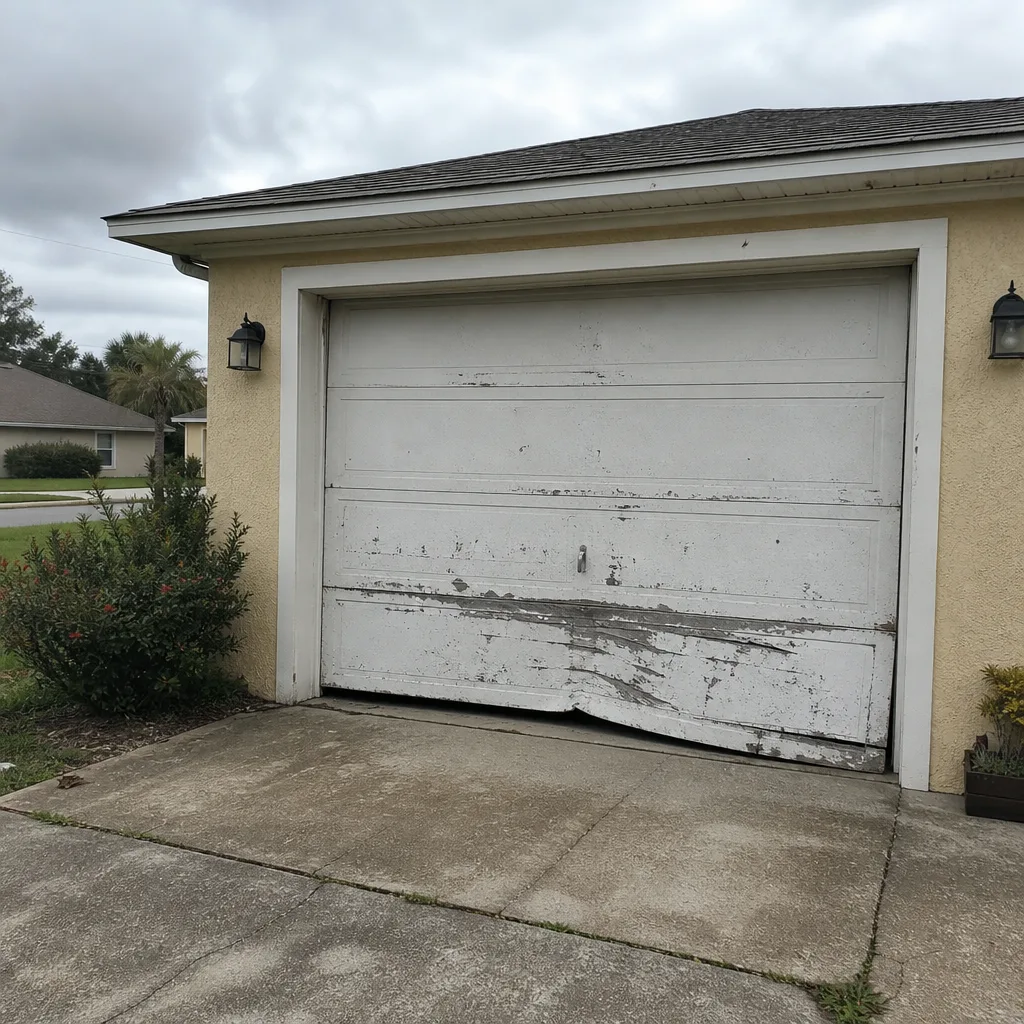 Before
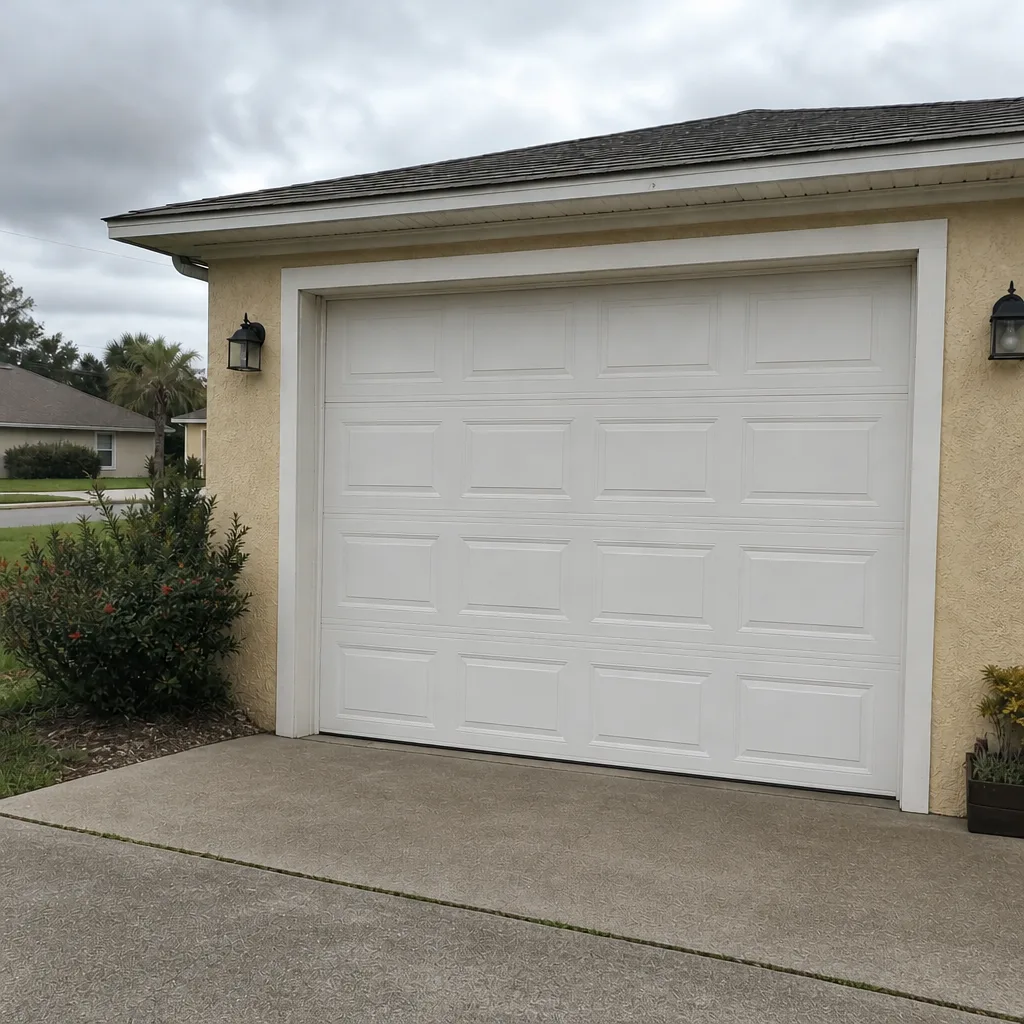 After
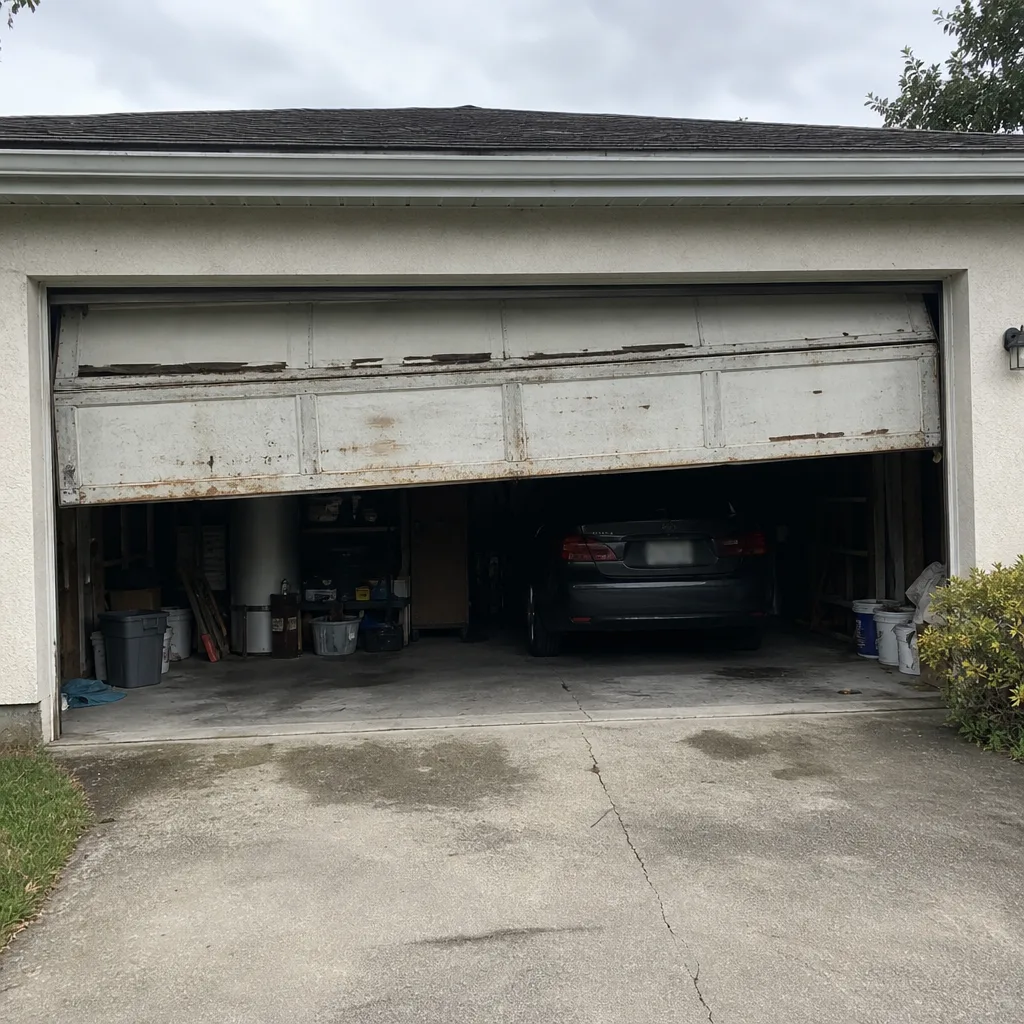 Before
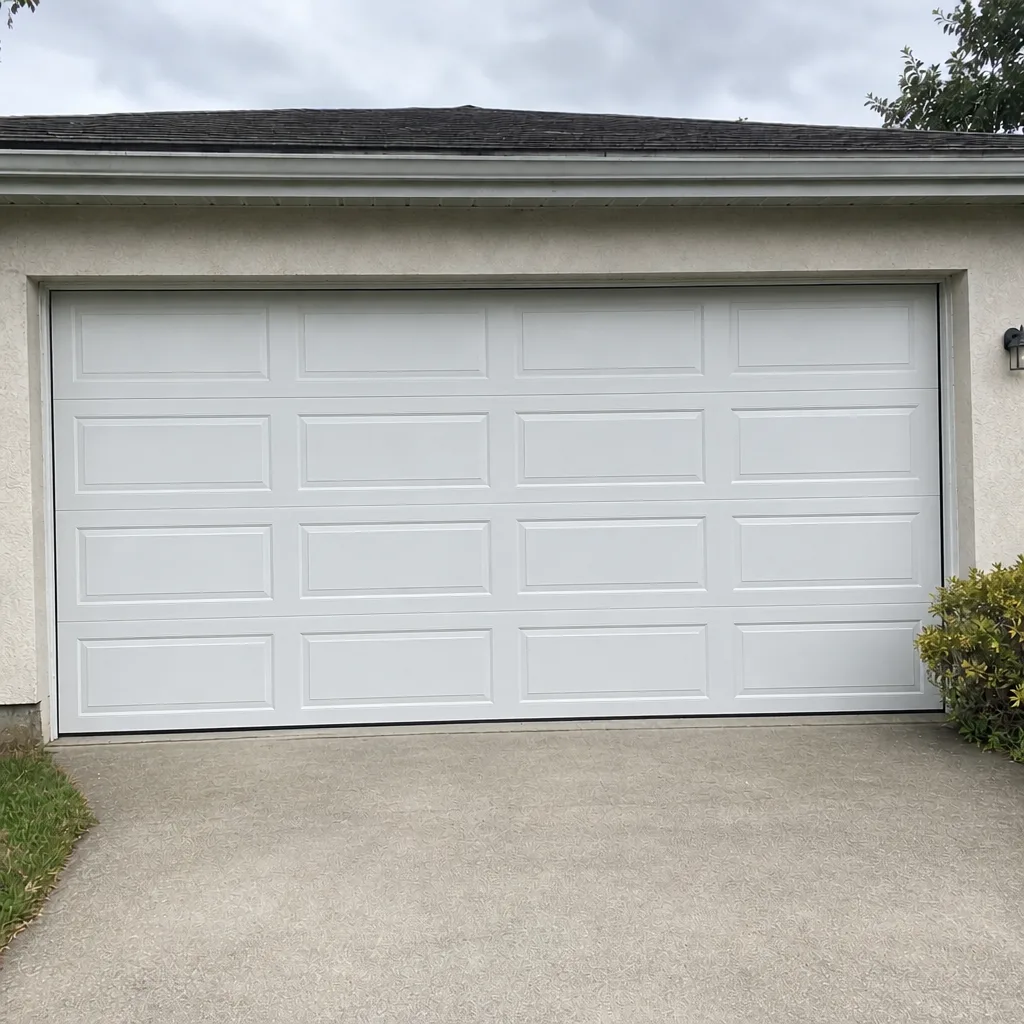 After
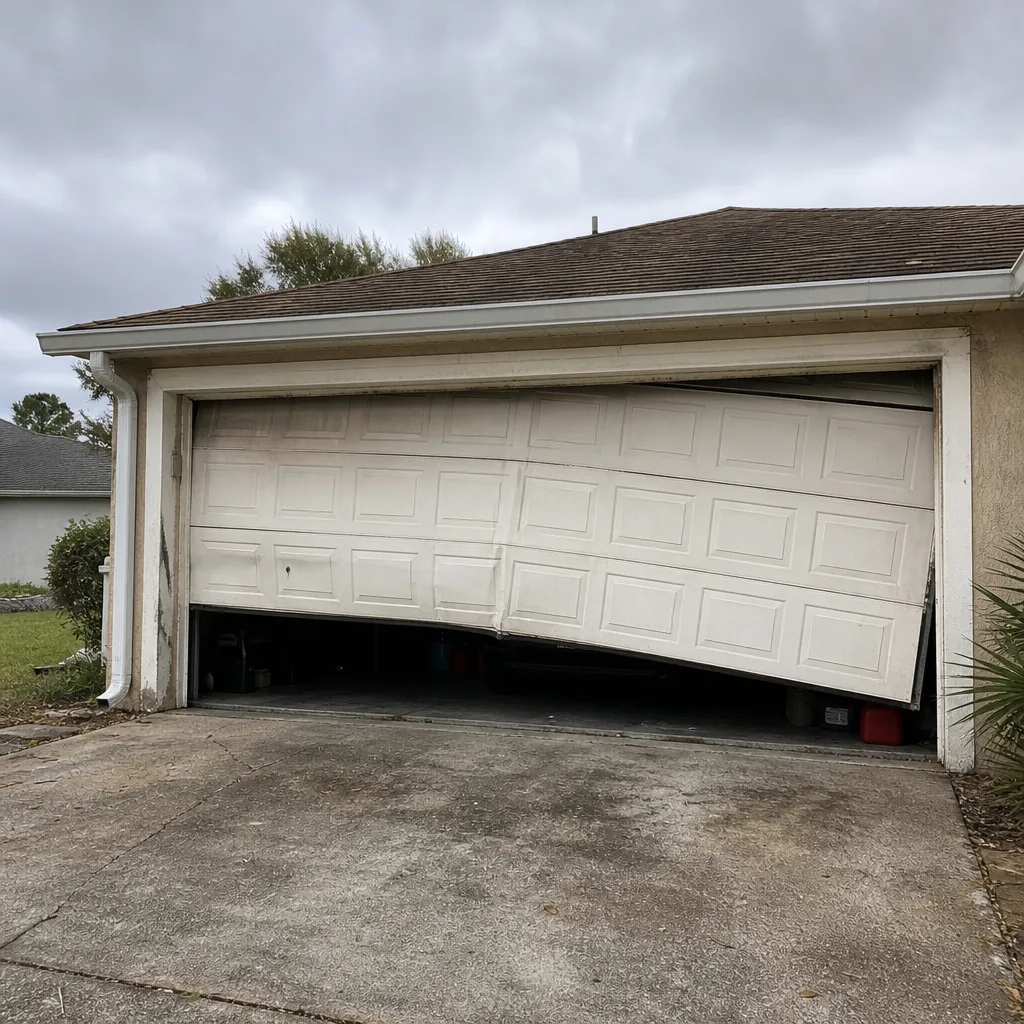 Before
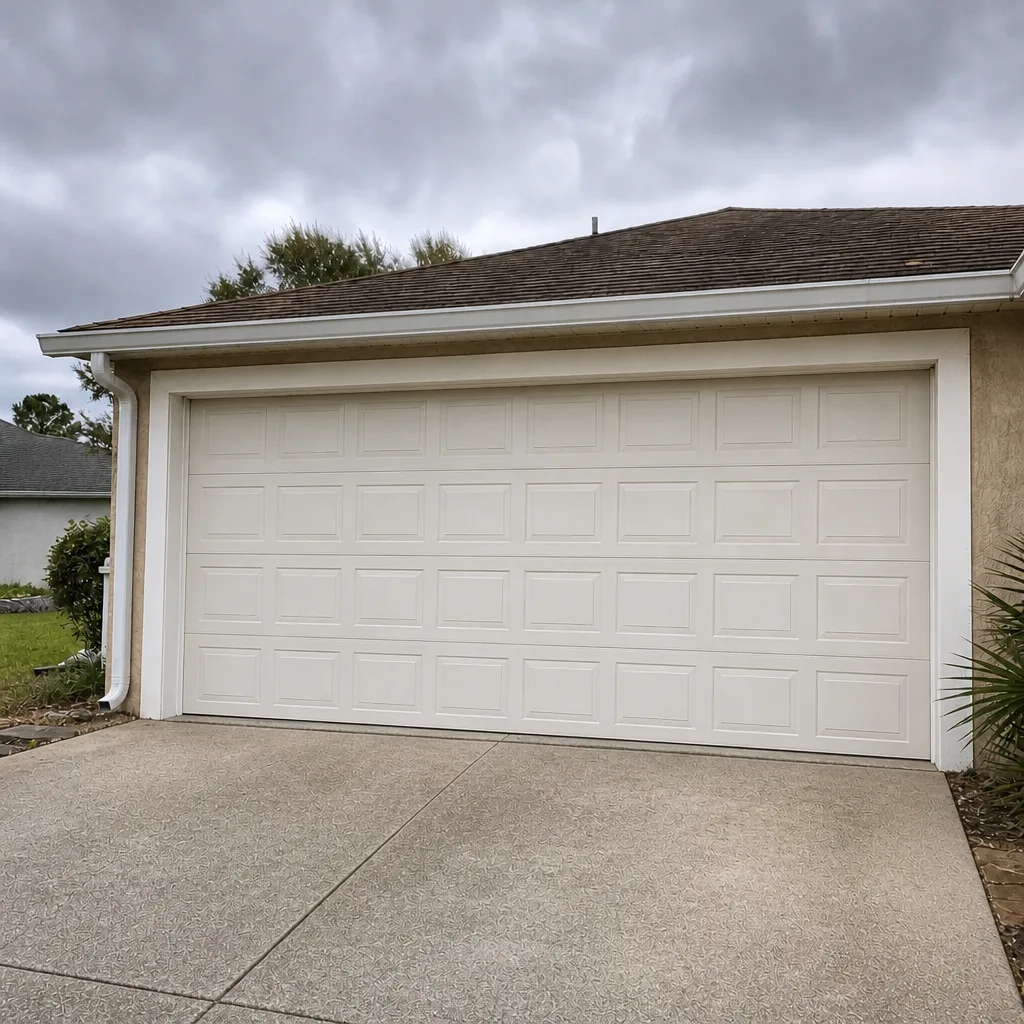 After
When to Call a Professional
Call a professional when the repair involves springs, cables, cable drums, structural panels, or a full door replacement. Call when the door is stuck in the open position and the house is exposed, or stuck closed and someone’s car is trapped. Call when the door is off its track or hanging at an angle. Call when the opener is sparking or the wiring is exposed. Call when a permit is involved. Call when the last repair didn’t quite work and something feels off about the door’s balance or sound. Spring Hill Garage Door Repair Pros offers free estimates in Spring Hill, and we quote the price before any work starts. If you’re not sure whether your problem needs us, call (844) 443-4697 and we’ll tell you straight. Emergency garage door service is part of what we do, not an upgrade we sell.
Frequently Asked Questions
You should not replace your own garage door spring. The spring stores enough energy to cause serious injury, and the winding bars, torque direction, and exact spring match are all things that go wrong fast. Spring repair is a professional job in every case, and Spring Hill Garage Door Repair Pros handles torsion and extension springs as a core service. Call (844) 443-4697 for an estimate.
Yes, a full garage door replacement in Florida typically requires a permit, because the door is part of the building envelope and the door must meet the Florida Product Approval for wind rating. A homeowner may be able to pull the permit on their own primary residence, but the inspection still has to pass. Check with the city’s building department for your specific address and door, and ask us about documentation when you call (844) 443-4697.
Spring repair is the most common repair we hear about, and the typical estimated range is $180-$340 for a single torsion spring and $360-$680 for a matched pair. Roller replacement runs $90-$180 and sensor replacement runs $100-$175. The written quote you receive before work starts is the final price. Call (844) 443-4697 for a free estimate.
Yes, roller replacement and safety sensor replacement are safe homeowner jobs if the door is fully down and the spring is relaxed. Both jobs are visible, low-tension, and don’t require tools beyond a screwdriver and a wrench. If the door feels heavy when you lift it by hand with the opener disconnected, stop; that’s a spring problem, not a roller problem.
It can. A wind-rated garage door’s Florida Product Approval covers the door, track, and reinforcement together. Straightening a bent track or swapping a component without matching the original approval can put the door out of its rated configuration, and insurers can question coverage when the door doesn’t match its approval. Call (844) 443-4697 if you need a wind-rated door repair documented.
Look for mismatched springs, rollers missing from their hinges, cross-threaded bolts on the opener rail, and track that’s visibly bent and was straightened rather than replaced. A door that feels heavy when lifted by hand or that walks out of the tracks on one side is showing signs of a repair that compromised its balance. We see these regularly in Spring Hill homes, and the diagnosis is usually straightforward. Call (844) 443-4697 to schedule one.
The Bottom Line
The DIY decision isn’t about your skill level. It’s about which tasks carry danger that stays the same no matter how careful you are. Springs, cables, and cable drums are always professional work. Rollers, sensors, and limit switches are genuinely owner-serviceable. Door replacement in Florida is a code and permit question before it’s a tool question, and the door’s wind rating is a resale and insurance issue, not a convenience issue. When the job is safe, we’d rather you save the money and do it yourself. When the job involves a loaded spring, a wind-rated track, or a permit, it pays to have someone who knows your brand and your code on the job. Spring Hill Garage Door Repair Pros is the team that knows your door and your opener, and we’re ready to help.
Call (844) 443-4697 for a free estimate. Our technicians have up to 8 years of experience, we work across LiftMaster, Chamberlain, Genie, Clopay, Amarr, Wayne Dalton, Craftsman, and Raynor equipment, and we quote the price before any work starts. Repairs, openers, and full door installation are all here. If you’d like to start at the top, visit Spring Hill Garage Door Repair Pros to see what we do.
Written by the team at Spring Hill Garage Door Repair Pros.